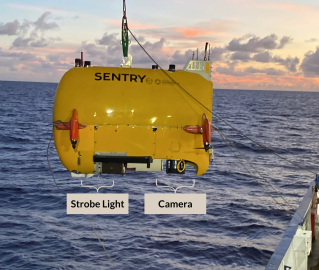
In our second expedition of the year in the Mariana region, E/V Nautilus will spend 22-days at sea. The expedition will utilize the ROV, mapping, and telepresence systems of E/V Nautilus in combination with autonomous underwater vehicle Sentry to explore priority deep-sea areas identified by the management and science community, including abyssal plain habitats, as well as other deep-sea areas offshore the Mariana Islands that support resource management priorities. This is the second of two consecutive E/V Nautilus expeditions that will explore poorly known deep-sea habitats around the Mariana Islands in 2026, and focus on the northeasternmost portion of the US EEZ around the Commonwealth of the Northern Mariana Islands. On this expedition, the team will also deploy a high-frequency acoustic recording package from the NOAA Pacific Islands Fisheries Science Center to support cetacean monitoring in the region.




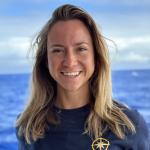
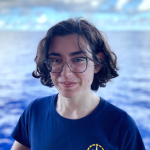
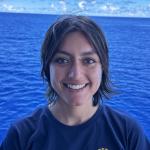
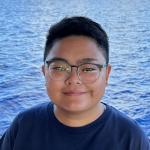
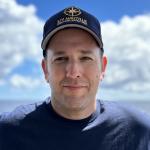
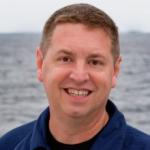
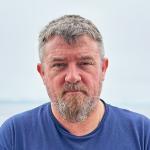
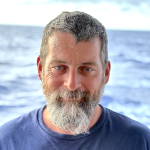
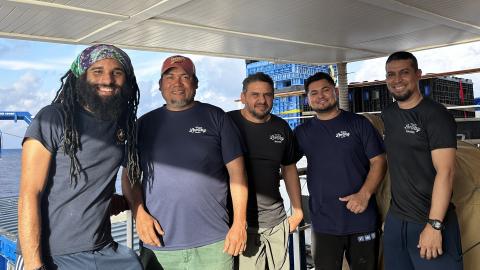
Meet the Team





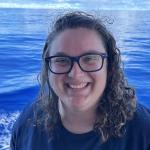





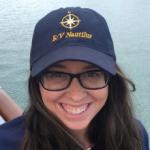
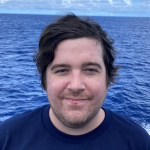
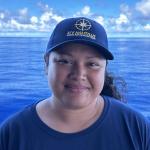






Gallery Highlights

Abyssal Sentry Survey Updates
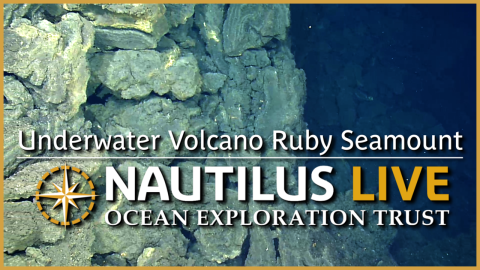
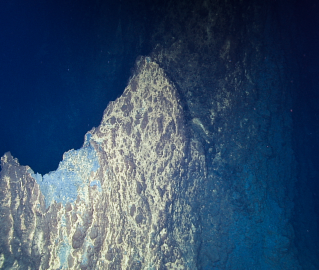
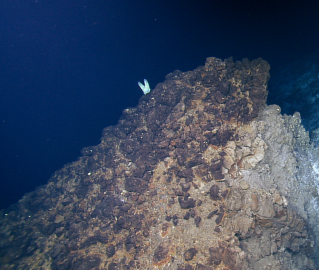
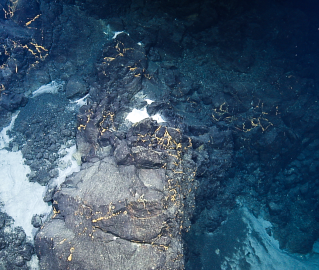
Post-Eruption Geology of Ruby Seamount
Expedition Posts

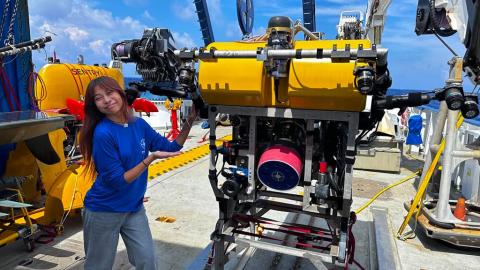
The Guam Daily Post chats with NA180 Corps of Exploration members, science communicator Amanda Dedicatoria, Dena Kamano with the hashtag CNMI Department of Lands and Natural Resources' Division of Fish and Wildlife, and University of Guam student Angelie Donguines about sailing through Mariana and Micronesian waters.

Say hello to this Bassozetus cusk-eel, who swam right up for a closer look at the ROV. That thin filament near its chin is a modified pelvic fin. In related cusk-eels, these fins are packed with sensory cells, essentially functioning like barbels, and are thought to help the fish feel around the sediment for food in the dark. Curious, a little nosy, and clearly not camera-shy.

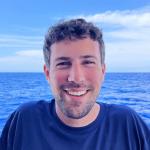
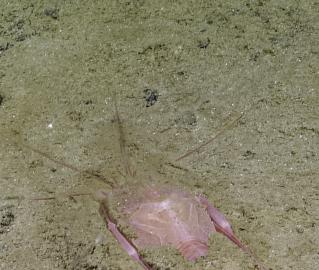
Meet this pair of amphipods, perched together on a bare stalk rising off the abyssal plain. Amphipods are scavengers, and getting up off the seafloor helps them catch scent plumes drifting by in the current, an easier way to find food in a habitat where meals are few and far between. Anecdotally, some amphipod species are thought to pair for life, and this duo was found sticking close together....

Atop an unnamed seamount in the Federated States of Micronesia, we met golden slit snails from the superfamily Pleurotomariidae. Beautiful and vibrant, these snails are part of an ancient family of gastropods dating back to the Cambrian era and are a testament to the deep sea's wonders.

Sea cucumbers can often be found munching on the soft sediment of the abyssal plain; their lives defined by the fact that the seascape they traverse is also the one they eat. As our ROVs fly over the ancient seafloor, beholding these wonderful sea pickles, we rarely catch a glimpse of their rather hungry undersides, including the ring of tubefeet that feed our favorite invertebrate.

Returning to E/V Nautilus for the NA180 expedition as Lead Scientist is Larry Mayer. Dr. Mayer is the Director of the Center for Coastal and Ocean Mapping / Joint Hydrographic Center at the University of New Hampshire and Chair of OET's Board of Directors. A geologist and world expert in mapping technology, Larry is leading the team, assisting in closing gaps in seafloor coverage.

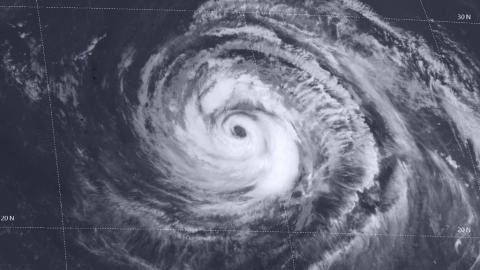
After moving out of the region around the Mariana Islands impacted by Super Typhoon Dolphin’s heightened wind and swells, we are now safely in the EEZ of the Federated States of Micronesia (FSM). We are grateful to have been granted a permit by the National Oceanic Resource Management Authority of the Federated States of Micronesia (FSM NORMA) to assist them in gathering mapping data and potentially ROV and AUV surveys within priority regions (black lines) of their national waters. Orange icons indicate previous deep-sea observations of the seafloor in FSM dating back to the 1960s from Lamont-Doherty Earth Observatory's R/V Vema. There's an enormous amount left to learn about this massive ocean nation.

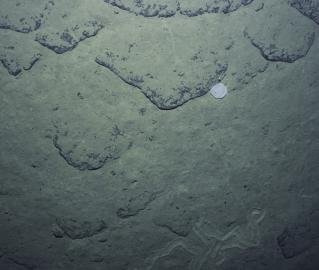
Have you enjoyed our exploration of the abyssal plain with ROV Little Hercules? If so, you're in luck! Part two of our exploration of the Mariana deep sea will almost exclusively focus on this mysterious habitat. Abyssal plains are predominantly flat and heavily sedimented seafloor areas that cover ocean basins at depths between 3,000 and 6,000 meters. These widespread areas cover more than 70% of the global seafloor and 50% of the Earth’s surface, thereby representing by far the largest and least explored portions of our planet.
ROV surveys on abyssal plain habitats this summer will continue to use E/V Nautilus’ dual-body ROV system consisting of ROV Little Hercules and towsled ROV Atalanta. These dives will focus on surveying areas east of the Mariana Trench at depths between 4,500 and 5,800 meters. Survey sites will be chosen that are close to those surveyed by AUV Sentry. Stay tuned for more adventure!

During our exploration of the Mariana Islands region, we'll visit some of the oldest seafloor on Earth. While the are has been an important global focus for deep-sea research, the vast majority of deep-sea habitats east of the Mariana Trench remain unsurveyed and uncharacterized. These widespread areas cover close to one-quarter of the US Exclusive Economic Zone around the Mariana Islands and are by far the least surveyed in the region. In addition to being virtually unexplored, these areas also contain the oldest seafloor in the Pacific (over 167 million years old).

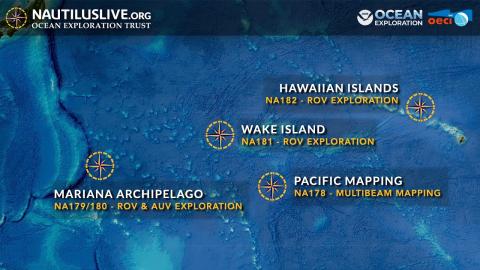
While exploring the Marianas, OET's ROVs Hercules and Little Hercules, alongside WHOI's AUV Sentry and Waveglider, will work together to put eyes on parts of the seafloor never before surveyed. For the first expedition (NA179), we'll be focusing on the southern area east of the Mariana Trench. The next expedition, NA180, will focus on sites further north.

Happy World Oceans Day! We're thrilled to be launching our 2026 ocean exploration season very soon and to share our discoveries of the global ocean with the world through 24/7 live streaming. Learn more about the 2026 season via The Guam Daily Post.

OET is proud to welcome Adolfo Rodríguez Velázquez from Puerto Rico to our 2026 Science Communication Fellow cohort! Learn more about this science communicator and professor from the UPR Cayey via Primera Hora.
¡OET se enorgullece de dar la bienvenida a Adolfo Rodríguez Velázquez, de Puerto Rico, a nuestra cohorte de Becarios de Comunicación Científica de 2026!
