
Megan Cook
Tell us about your work/ research. What kinds of things do you do?
As OET's Director of Education & Outreach, I bring together exceptional partners in the marine science and education realms and help grow OET programs to inspire our next generation of explorers. Every day is different as our small team works together to plan and execute storytelling projects that engage and grow a diverse audience of millions with ocean exploration, ensuring equity and inclusion are at the forefront of all programs. It's a fun, creative challenge to work with such a wide portfolio of programs, including the Science Communication Fellowship, Science & Engineering Internship Program, Nautilus Patch Design Contest, science communication training, professional development training workshops, livestreaming round-the-clock content, social media, curriculum writing, museum exhibition development, video production, and more year-round. I travel frequently as a public speaker to teach others and bring ocean exploration discoveries to new audiences.
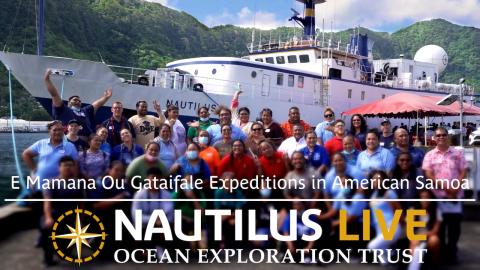
I'm extremely proud of the work I get to do to partner in Pacific Island community relationship building, including expedition science and outreach co-development, launching a cultural liaison program, establishing protocol for elevation of Indigenous knowledge systems, and culturally relevant multi-language broadcasting programs. I am passionate about helping the whole Nautilus team be strong, thoughtful mentors who accurately and passionately communicate science and technology stories from sea. I have the joy of working with so many creative and dedicated people who also love sharing ocean stories. Every day is different working alongside scientists, engineers, funding partners, educators, community organizations, young students, and national leaders.
What sparked your initial interest in your career?
Lots of six-year-olds want to be marine biologists; I was definitely one of them! The ocean seemed really far away from my house in Idaho, but the creatures that lived there were wacky and fascinating! That distance was shrunk by a great educator. My first-grade teacher was a scientist-turned-educator and brought all kinds of ocean resources into her teaching. I remember doing math with shells and drawing crayon ocean currents. Many great educators along my path made science seem really possible, and my curiosity flourished. I now understand there were many different paths I could have followed to end up working in the ocean: biological science is only one road to this life.
My parents and grandparents also had a lot to do with my interest since they raised an active, outdoor family. I spent a lot of time as a kid playing in local parks, hiking off the beaten path, camping by lakes and streams, and being sent outside to run around basically every day. Those settings helped me learn to observe nature in detail and to ask good questions, which is exactly what being a scientist is all about.
Who influenced you or encouraged you the most?
In every step of my career, I have found mentors whom I look up to and can learn from. Some have formally been in mentorship positions like advisors, bosses, and field crew chiefs. However, I also find enormous major motivation in celebrating the success of my coworkers, classmates, and friends, including early-career folks passionate about making a difference in their communities. I have always appreciated the people who demonstrated to me that it was cool to work hard and be fascinated by new things.
What element of your work/ study do you think is the most fascinating?
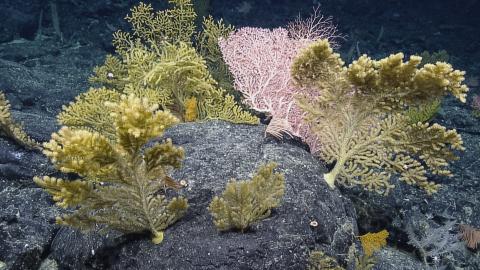
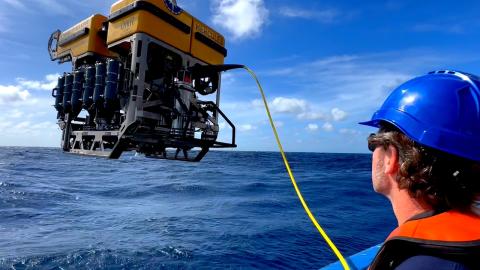
I am extremely grateful that my job is to help people fall into fascination with our planet. I love using technology to share really cool ocean stories. I love presenting to new audiences to share that fascination! The spark of discovery never gets old for me. Every day we put the ROVs into the water, our team, including curious minds all over the world, can discover and experience something entirely new.
How did you get involved with the Nautilus Exploration Program?
I first met the Nautilus Exploration Program watching the live feed online! In 2012, I watched on the last day of the expedition season as ROV Hercules discovered a shipwreck near Knidos, Turkey. I couldn’t believe I was seeing such a remarkable moment LIVE and knew I wanted to find a way to work with OET. In 2013, I applied for the Educator-At-Sea program (now called the Science Communication Fellowship) as an informal educator. I was then writing early-career-focused content for the non-profit organization Mission Blue and bringing ocean content into the rapidly expanding social media outreach space. I returned to the team as a Lead Fellow in 2014 and was hired full-time when the Community STEM Program was created.
What other jobs led you to your current career?
Although I knew I wanted to work in an ocean field, my pathway to this point has taken me in many directions. My first experience teaching others about discovery was as a high-school docent in my hometown zoo. In college, I worked as a researcher studying tropical fish reproduction and competition, but also as a tour guide. I have worked as a submarine copilot, an invasive species wrangler, an operations manager handling small boats, a writer, a scuba diving and freediving instructor, a public speaker for ocean conservation groups, a fitness instructor, and an underwater camerawoman. Learning that my passion was in sharing ocean stories was a major turning point for my career, leading me to use my scientific training alongside education, communication, and writing skills.
Never be afraid to follow your curiosity! The wide range of my experience -- strategic, technical, programmatic -- has opened many doors to exciting and challenging professional opportunities.
What are your degrees and certifications?
I proudly have a Bachelor of Science in biology and chemistry from Oregon State University with an emphasis in marine biology. I was also an International Scholar studying tropical ecology at James Cook University in Australia, and studied oceanography in my first truly offshore experience with the Sea Education Association aboard the tallship SSV Robert C. Seamans. I am also a scuba diving and emergency first response instructor.
I also proudly have a Masters degree from Duke University in Environmental Management, focused on Environmental Leadership. My thesis, 'Multi-scale knowledge and knowledge gaps in deep-sea mining regional environmental management planning', examined the emerging deep-sea mining industry and its regulatory processes.
What are your hobbies?
I love reading, traveling around the above-water and underwater world, and collecting googly-eyed kitchen gadgets.
What advice would you give someone who wants to have a career like yours?
In the competitive field of ocean research, my advice is to remember that sometimes it is your complementary, non-science skills that can give you an advantage. Among a field of applicants with equally strong science qualifications, skills like writing, public speaking, creative troubleshooting, or personal attributes like your persistence, teamwork, and manners open lots of doors. Willingness to learn and offering to help people do unglamorous parts of their jobs are great ways to show initiative! Be willing to learn new approaches from new people as you rise through responsibilities. Other skills that are science-adjacent but extremely valuable include data management, data processing, GIS, boat handling skills, equipment maintenance, engine repair, and grant writing.
Expeditions
Megan participated in the following Ocean Exploration Trust expeditions:
2013
2014
2015
2017
2019
2021
2022
- Luʻuaeaahikiikekumu - Ancient Seamounts of Liliʻuokalani Ridge
- Deep Sea Biodiversity & Ancient Volcanoes near Johnston Atoll
- From Shore to the Abyss: Exploration of Marine Mammal Communication and Shark Communities in the Main Hawaiian Islands
- From Shore To the Abyss: Exploration of Shark Communities and Microplastic Pollution in the Main Hawaiian Islands
2023
Gallery Highlights
Related Posts

OET's article, "Building the Next Generation of Explorers," appears in the Journal of Ocean Technology's "Youth and the Ocean: A Fresh Perspective" issue. Read it here.

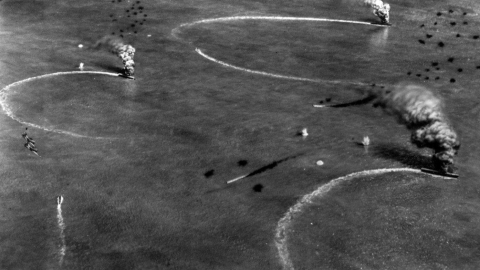
#TBT to our NA173 expedition when Corps of Exploration members Megan Cook and Locke Patton connected from E/V Nautilus to the Museum of Science, Boston, to discuss searching for WWII shipwrecks! Watch the video here.

Local to Los Angeles? Join OET's Megan Cook at AltaSea at the Port of Los Angeles for the Earth Month Open House and hear sea stories and new discoveries from Nautilus Live!

OET Director of Education & Outreach Megan Cook will be presenting at the National Science Teaching Association conference in Anaheim in April as part of the National Marine Educators Association Share-a-Thon. Join for an introduction to new classroom-ready resources and new ideas to spark curiosity and learning about the deep ocean.
