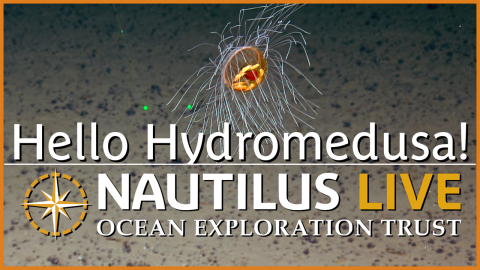
E/V Nautilus Returns to the Marianas to Explore Deep-Sea with Ocean Exploration Technology Collaboration

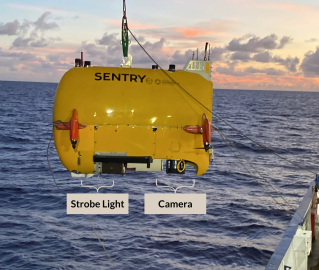
The Ocean Exploration Trust’s (OET) Exploration Vessel (E/V) Nautilus sets sail in late June on the first of two expeditions to explore the deep sea offshore the Mariana Islands. From June through August, these back-to-back expeditions will utilize the remotely operated vehicle (ROV), mapping, and telepresence systems of E/V Nautilus in combination with Woods Hole Oceanographic Institution (WHOI)’s autonomous underwater vehicle (AUV) Sentry to explore previously unsurveyed deep-sea areas around the Mariana Islands, with a focus on abyssal plain habitats and ancient seamounts east of the Mariana Trench.
The first three-week expedition (NA179) will focus on the southeasternmost portion of US waters around the Commonwealth of the Northern Mariana Islands (CNMI), while the second expedition (NA180) will focus on the northeasternmost portion of this region. These expeditions are primarily supported by NOAA Ocean Exploration via the Ocean Exploration Cooperative Institute, with additional support from the Bureau of Ocean Energy Management for AUV Sentry’s participation.
“For the last 17 years, E/V Nautilus has been dedicated to exploring poorly known ocean regions using the ship's ROV, mapping, and telepresence systems. In recent years, we have also integrated various other deep-diving vehicles from our partners alongside OET’s technologies, thereby making exploring the deep ocean and learning about the planet more efficient than ever before,” says Dr. Robert Ballard, OET’s founder and Chief Executive Officer.
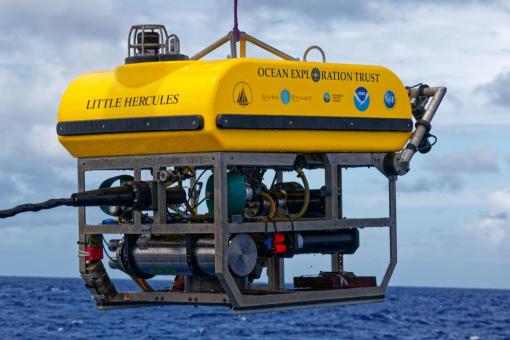
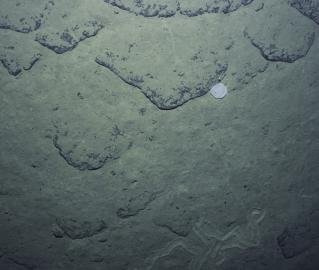
The deep sea around the Mariana Islands has been a major focus of global scientific research, particularly in the study of submarine volcanoes, hydrothermal vents, and trench habitats. This region is one of Earth’s most tectonically dynamic locations- marked by the world’s deepest trench, and some of the oldest seafloor on the planet. In summer 2025, E/V Nautilus conducted two expeditions to survey deep-sea habitats around the Mariana Islands, with one focused on seafloor mapping and the other including nine successful ROV dives and six AUV dives. The latter included the only visual surveys conducted to date on the abyssal plain habitats east of the Mariana Trench.
Despite a long history of ocean research in the region, the vast majority of the deep seafloor east of the Mariana Trench remains uncharacterized. This extensive area covers nearly one-quarter of US waters around the Mariana Islands and is among the most unsurveyed habitat types in the region. This area will be the focus of the two upcoming E/V Nautilus expeditions.
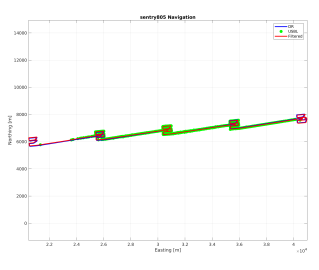
Like all of E/V Nautilus expeditions in 2026, the Mariana Islands missions will collect data to fill critical gaps in ocean knowledge and support US and international scientific priorities by characterizing deep ocean habitats, biodiversity, bathymetry, and geological formations, including marine critical minerals and the environments where they are found. ROV dives will survey abyssal plain habitats and unexplored seamounts, including the oldest seafloor in the Pacific and one of the oldest on our planet (over 167 million years old). Surveys using WHOI’s 6,000-meter rated AUV Sentry will complement E/V Nautilus’ ROV and seafloor mapping operations. This multi-platform surveying will require AUV Sentry to operate at significant distances away from E/V Nautilus, which will be achieved using a wave-powered autonomous SV3 Block II Wave Glider to relay messages between AUV Sentry and the engineering team aboard E/V Nautilus.
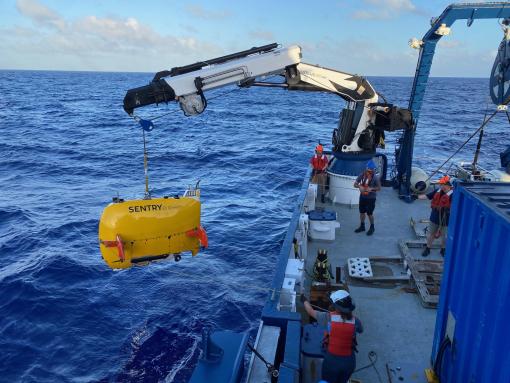
“Simultaneous operations allow us to move from traditional, linear exploration to a multi-pronged approach that combines the strengths of autonomous and remotely operated vehicles,” said Sean Kelley, AUV Sentry Program Manager at the Woods Hole Oceanographic Institution. “By operating AUV Sentry and OET's ROVs concurrently, we can greatly increase the amount of data we can return to the scientific community from some of the most remote and extreme environments on the planet.”
OET’s expedition role is scientific — it documents what exists: habitats, species distribution, and geological features, and does not perform analyses related to commercial prospecting or mineral valuation. The data gathered aboard E/V Nautilus establishes a scientific baseline that future research, resource management, and responsible ocean stewardship decisions depend on. All data from E/V Nautilus expeditions are publicly archived with no embargo or access restrictions to ensure that deep-sea data is permanently available. All expedition data will have copies remaining with expedition partners and collaborators in the Mariana Islands, including hard drives to be given to partners in Guam and CNMI, and will also be digitally archived in publicly available repositories accessible to anyone.
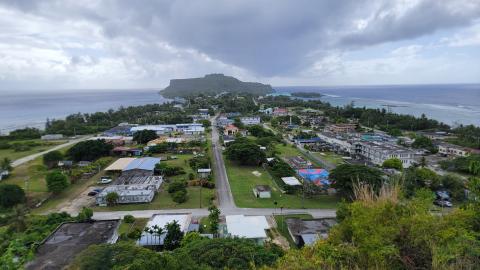
The plans for each expedition were developed with input from scientists, resource managers, and local community stakeholders in the region. The expedition teams will include seven local educators, students, early-career professionals, and science team members from the University of Guam, William S. Reyes Elementary School in Saipan, Tåno, Tåsi, yan Todu, Guam Community College, the CNMI Division of Fish and Wildlife, and the Mariana Trench Marine National Monument.
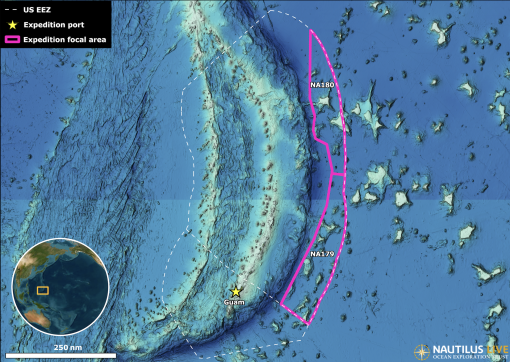
Viewers across the Mariana Archipelago and around the world are invited to participate as the expeditions will be streamed live on NautilusLive.org, a 24-hour platform that brings ocean exploration directly to viewers, who can join from anywhere with an Internet connection. Telepresence technology allows audiences to engage with the team at sea, asking questions and receiving real-time behind-the-scenes updates via NautilusLive.org, as well as on social media. Classrooms or community events in Guam and CNMI are invited to connect with the at-sea team of STEAM professionals via free educational Q&A interactions. Additionally, OET offers free STEAM educational resources for K-12 learners, including national standards-aligned activities, engineering design challenges, and creative projects for use in the classroom or at home.
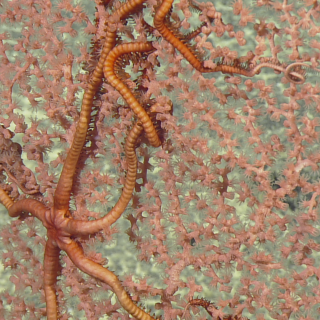
Deep-Sea Habitats in the Mariana Islands I
This expedition will focus on exploring the Mariana region- one of the ocean's most tectonically and volcanically dynamic locations, marked by the Earth’s deepest oceanic trench, some of the most active submarine volcanoes, and some of the oldest seafloor on the planet.
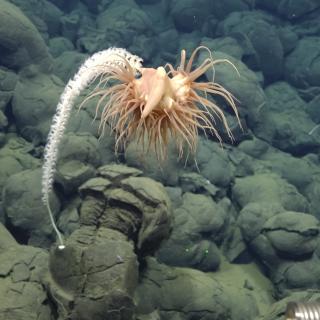
Deep-Sea Habitats in the Mariana Islands II
In our second expedition of the year in the Mariana region, E/V Nautilus will spend 22-days at sea.