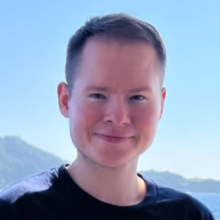
Krystian Kopka
Tell us about your work/ research. What kinds of things do you do?
I work in field engineering for oceanographic, atmospheric, and underwater vehicle systems, mostly at sea or in polar regions. A lot of my work has been supporting scientific systems in places where you can’t exactly call someone to come fix things. That can mean installing and troubleshooting oceanographic instruments, working with multibeam sonar, splicing fiber optic cables, or supporting ROV and AUV operations. I’ve worked on research vessels and field stations in the Arctic, Antarctic, and Greenland, and I wintered over at the South Pole operating and maintaining NOAA’s Atmospheric Research Observatory. A lot of the job is keeping systems running when things break in the field, figuring out why an instrument isn’t talking, chasing down bad connections, or making something work with the tools and parts you have onboard.
What sparked your initial interest in your career?
I grew up in Brooklyn, New York, and I had no idea oceanography was even a career. I was studying mechanical engineering and geology when I had the chance to join the Northwest Passage Project through the University of Rhode Island. That experience completely changed the direction of my life. We sailed through the Northwest Passage aboard the Swedish icebreaker Oden and the Akademik Ioffe, and for the first time I saw scientists, engineers, marine technicians, and crew all working together to answer questions about the ocean. At one point, the ship even ran aground in the Arctic, and watching everyone work through a real problem under pressure left a huge impression on me. After college, I said yes to sailing from Annapolis to Greenland on a 64-foot research schooner with a small team, doing bathymetric surveys to map uncharted fjords and collecting samples along western Greenland. That trip made it pretty clear to me that I wanted to keep working in ocean science and field engineering. Those expeditions opened a door I didn’t even know existed, and I’ve been saying yes to opportunities in ocean science and engineering ever since.
Who influenced you or encouraged you the most?
I’ve been lucky to learn from a lot of people who were generous with their time and knowledge. The marine technicians and engineers I worked closely with in my career had a huge influence on me. They showed me what it looked like to be calm, capable, and useful at sea, even when things started going sideways. Every expedition has introduced me to engineers, technicians, scientists, and crew members who were willing to teach me something new, push me a little further, or trust me with something before I always felt ready. Those chances eventually led me into bigger opportunities, including sailing to Greenland, working on academic research vessels, and working in Antarctica. I wouldn’t be where I am today without the people who took a chance on me and showed me how things are done, and I try to carry that forward whenever I can.
What element of your work/ study do you think is the most fascinating?
I think it’s seeing how many different disciplines have to come together to make ocean exploration possible. On any given day, you might be working with scientists, ROV or AUV teams, engineers, and everyone brings a different perspective. I like solving technical problems, but what keeps me coming back is knowing that all of those small fixes and behind the scenes efforts help make new discoveries possible. A vehicle like Sentry can look like one system, but inside that system are hundreds of smaller pieces that all have to work together and survive saltwater, vibration, pressure, and corrosion. The ocean is an unforgiving place to do engineering, but trying to make useful measurements in that harsh environment is what keeps the work interesting.
How did you get involved with Ocean Exploration Trust? How did you become part of the expedition team?
I became involved through the AUV Sentry team at Woods Hole Oceanographic Institution and the National Deep Submergence Facility. I’m joining this expedition as engineering support for the AUV Sentry team, helping support the people and systems that allow Sentry to operate safely and collect useful data at sea. My path here has been a mix of engineering, shipboard technical work, and a lot of saying yes to field opportunities that pushed me outside my comfort zone. Over the past several years, I’ve worked around REMUS vehicles, gliders, acoustic systems, oceanographic instrumentation, and shipboard systems through WHOI, NOAA, and the U.S. Antarctic Program.
What other jobs led you to your current career?
My path has been a little unusual, but most of it connects back to working with scientific systems in remote places. The Northwest Passage Project with URI was the start. It gave me my first real look at oceanographic fieldwork in the Arctic and showed me that this kind of career even existed. After college, I sailed from Annapolis to Greenland aboard the R/V Marie Tharp. That was my first chance to work as part of a small research vessel team, where everyone had to help with everything: instrumentation, deck operations, troubleshooting, logistics, and small boat work. From there, I kept following opportunities that pushed me further into ocean science and field engineering. I worked as a technician aboard the R/V Sikuliaq, supported WHOI fieldwork and acoustic communications projects, wintered over at the Amundsen-Scott South Pole Station operating NOAA’s Atmospheric Research Observatory, and later worked aboard the R/V Nathaniel B. Palmer in Antarctica as a marine electronics technician. I also supported communications infrastructure as a rigger at Palmer Station. Each job taught me something different: how to work at sea, troubleshoot systems, and stay useful when the environment is working against you.
What are your degrees and certifications?
Mechanical Engineering B.E. - CUNY-City College GSOE; Geology B.S. - CUNY-City College
What are your hobbies?
I enjoy skiing, playing pool, hiking, and putting together scrapbooks after trips. It’s kind of my way of making sure the trip doesn’t just disappear into a camera roll or a hard drive. I also like to travel and wander around new places. A lot of my work has taken me to remote places, so I’ve gotten used to noticing the small details that make each place memorable.
What advice would you give someone who wants to have a career like yours?
Say yes to the opportunities that excite you, even if they don’t fit perfectly into your plan, and keep your bag halfway packed for the next adventure. I never imagined growing up in Brooklyn that I’d end up working in Antarctica or aboard research vessels around the world. Also, don’t worry if your path isn’t perfectly straight. Mine definitely wasn’t. Every expedition and every challenge teaches you something valuable. Ask questions, work hard, and don’t be afraid to take risks. You never know which opportunity is going to change your life.
Expeditions
Krystian participated in the following Ocean Exploration Trust expeditions:
