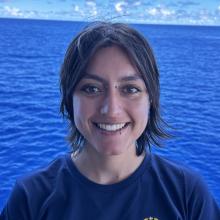
Isabel De Allende Silva
Tell us about work work/research. What kind of things do you do?
Since graduating, I have been piecing together different kinds of work while trying to build something around my interest in preserving and documenting the natural world—especially the stranger parts that are often overlooked. I split my time between film sets, fossil preparation, and photography. On film sets, I have worked on narrative shorts, music videos, commercials, and student projects in roles like 1st AC, 2nd AC, Camera PA, Swing, and Grip. With fossil preparation, I have been helping remove asphalt from excavated specimens and prepare them for research and/or display at the La Brea Tar Pits. With photography, I mostly shoot on film and spend time in the darkroom making prints, experimenting, and trying to learn different printing methods.
What sparked your initial interest in your career?
Since I was young, I have always had a fascination and deep respect for nature, which has shaped my sense of wonder and curiosity. I am especially drawn to the strange, often unseen organisms, both in the depths of the sea and preserved in sediments.
This curiosity has developed into a growing interest in understanding how marine ecosystems function and change over time, and how careful scientific observation can help support their protection. I am particularly interested in connecting past and present environments, using records of earlier marine ecosystems to better understand modern change and what it can tell us about the future.
Who influenced you or encouraged you the most?
My parents and sister, along with my professors and teachers throughout my education, have all encouraged me in different ways and helped shape how I think about and approach my work. I have also been influenced by researchers and PhD students I have had the privilege of meeting and working with, who have shown me different ways of thinking about and engaging with both science and creative work.
What element of your work/study do you think is the most fascinating?
I get to see things I could not have imagined, from the incredible diversity of animal morphology and the intricate patterns and designs found in nature to the details behind camera and lighting setups and how they shape what we see. Just as importantly, I find it inspiring to meet and work with the people in these fields and to see the different ways they think and create.
How did you get involved with the Ocean Exploration Trust?
After watching deep-sea exploration videos, I became curious about the field and searched online for internships. This is where I first learned about the Ocean Exploration Trust and became interested in joining the expedition team.
What other jobs led you to your current career?
My experiences on film sets prepared me to thrive in fast-paced, collaborative environments while handling delicate equipment and adapting quickly to changing situations. At the same time, my academic and research work deepened my interest in the intersection of marine science and paleontology. I assisted in a climate change research project led by USC professor David Bottjer and NHMLAC curator Austin Hendy, where I prepared fossil specimens, collected and analyzed data, and cataloged specimens using the EMu Collections Management System. My coursework and field experiences further shaped these interests, including marine science at the University of Otago, paleontology classes at USC, and scientific diving work through at the Wrigley Marine Science Center. Through these experiences, I conducted underwater ecological surveys, assisted with marine research projects, and participated in field studies examining coastal ecosystems and human environmental impacts. More recently, I collaborated with Professor Bottjer on a marine science and paleontology photography project using large-format analog photography techniques. Altogether, these experiences confirmed my passion for pursuing work that combines marine science, paleontology, and film.
What are your degrees and certifications?
Bachelor of Science in Environmental Studies and minors in Cinematic Arts and Dance in Entertainment — University of Southern California 2025, PADI Rescue Scuba Diver + EFR
What are your hobbies?
I like being outside, staying active, working with my hands, and learning new things. I enjoy climbing, scuba diving, running, traveling, photography and film (both creating and enjoying them), dance, and ceramics.
What advice would you give someone who wants to have a career like yours?
I have been surprised by how much this kind of career pushes you outside your comfort zone and requires you to be proactive in finding opportunities. The more flexible and adaptable you are, the better. A lot of the time, you will not feel ready and may feel nervous, but that is okay (and very common), and it is often an indicator that you will learn the most. Also, do not be discouraged from asking questions—especially asking about “why”—and take time to understand the stories behind how things work, how they came to be, and, most importantly, the people involved.
Expeditions
Isabel participated in the following Ocean Exploration Trust expeditions:
