

Lead Scientist
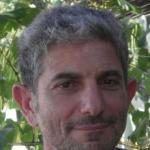
Lead Scientist
Expedition Partners

Meet the Team





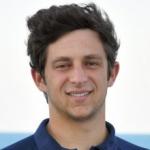

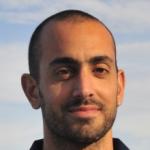
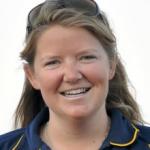

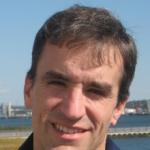







Gallery Highlights
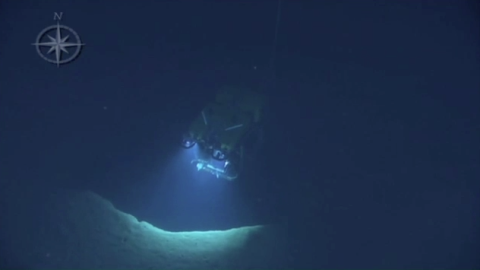
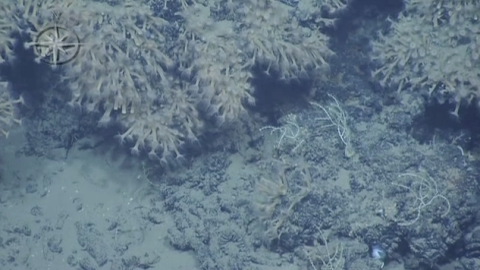
Selected Publications
2025
(2025). Animal burrowing at cold seep ecotones boosts productivity by linking macromolecule turnover with chemosynthesis and nutrient cycling. Biogeosciences 22 (5): 1321–1340. https://doi.org/10.5194/bg-22-1321-2025
2024
(2024). Quantification of bottom trawl damage to ancient shipwrecks: a case study from the coastal waters of Turkey. Threats to Our Ocean Heritage: Bottom Trawling. Jarvis C (ed.) : 41-52. https://link.springer.com/content/pdf/10.1007/978-3-031-579…
(2024). Animal burrowing at cold seep ecotones boosts productivity by linking macromolecule turnover with chemosynthesis and nutrient cycling. EGUsphere https://doi.org/10.5194/egusphere-2024-1285
2023
(2023). Modes of gas migration and seepage on the salt-rooted Palmahim Disturbance, southeastern Mediterranean. Marine and Petroleum Geology https://www.sciencedirect.com/science/article/abs/pii/S0264…
(2023). Modes of gas migration and seepage on the salt-rooted Palmahim Disturbance, southeastern Mediterranean. Marine and Petroleum Geology 153: 106256. https://www.sciencedirect.com/science/article/abs/pii/S0264…
(2023). Metabolic handoffs between multiple symbionts may benefit the deep-sea bathymodioline mussels. ISME Communications https://www.nature.com/articles/s43705-023-00254-4#Bib1
(2023). Occurrence and genesis of cold-seep authigenic carbonates from the south-eastern Mediterranean Sea. The Depositional Record 9: 844-870. https://onlinelibrary.wiley.com/doi/10.1002/dep2.239
(2023). Metabolic handoffs between multiple symbionts may benefit the deep-sea bathymodioline mussels. ISME Communications https://www.nature.com/articles/s43705-023-00254-4
2021
(2021). The worm affair: Genetic diversity in two species of symbionts that co-occur in tubeworms from the Mediterranean Sea. bioRxiv
2017
(2017). Methane hydrate stability and potential reserves In the Levant basin. MS Thesis: University of Haifa https://www.proquest.com/dissertations-theses/methane-hydra…
2015
(2015). A unique isotopic fingerprint of sulfate-driven anaerobic oxidation of methane. Geology 43 (7): 619-622. https://doi.org/10.1130/G36688.1
2014
(2014). Hydrocarbon-related microbial processes in the deep sediments of the Eastern Mediterranean Levantine basin. FEMS Microbial Ecology 87(3): 780–796. https://academic.oup.com/femsec/article/87/3/780/578119
(2014). First evidence for the presence of iron oxidizing Zetaproteobacteria at the Levantine continental margins. PLoS ONE 9(3): e91456. https://journals.plos.org/plosone/article?id=10.1371/journa…
(2014). Cold seep biogenic carbonate crust in the Levantine basin is inhabited by burrowing Phascolosoma aff.turnerae, a sipunculan worm hosting a distinctive microbiota. Deep-sea Research I 90(1): 17-26. https://www.sciencedirect.com/science/article/pii/S09670637…
(2014). Distribution of the Lamellibrachia spp. (Sibogilnidae, Annelida) and their trophosome endosymbiont phylotypes in the Mediterranean Sea. Marine Biology 161(6): 1229-1239. https://link.springer.com/article/10.1007/s00227-014-2413-y
2013
(2013). Multidisciplinary Study of Microbial Niches at the Deep Benthos of Lavantine Basin. Dissertation: University of Haifa https://www.proquest.com/dissertations-theses/multidiscipli…
2011
(2011). Biological-physical coupling of sessile marine organisms at intermidiate reynolds number scale. MS Thesis: University of Haifa https://www.proquest.com/docview/2636355378?pq-origsite=gsc…
