To Be the Ocean That Carries All of Us

Written by Amanda Dedicatoria, science communicator
If there is anything I can tell you about the islands of the Marianas, which form an archipelago that rests along the great Mariana Trench, it is that they are beautiful.
To be from the Marianas, this sea of islands created by the friction of volcanic processes that adorn the edges of the deepest oceanic trench of our world, is to know many things: lush reefs crowned with ripples of sunlight, the whispers of palm leaves swaying in the salty breeze, and the brilliant blue band of the Pacific Ocean lining every horizon.
For this 2026 expedition season, I was invited to sail on E/V Nautilus as a Science Communication Fellow as part of the NA180: Deep-Sea Habitats in the Mariana Islands II expedition, which aims to explore abyssal plain habitats and other deep-sea areas within the northeasternmost portion of the U.S. Exclusive Economic Zone around the Commonwealth of the Northern Mariana Islands.
As I prepare to spend three weeks at sea to bring the stories of my region and the wonders of its waters to you, my heart aches for my community members at home who were devastated by two of the largest storms that tore across our planet this year—Super Typhoon Sinlaku in mid-April and Super Typhoon Bavi in July.
For the Marianas, home to the Indigenous Chamorro/CHamoru and Refaluwasch peoples, typhoons are an element of life in this part of the world. However, the occurrence of two super typhoons tearing through the Mariana Archipelago in such a short period of time is highly abnormal.
Exacerbated by unusually hot ocean waters, Sinlaku hit centered on Saipan with 150mph winds, and Bavi lashed Rota with winds of up to 180mph. Up and down the archipelago, the storms left none of our islands unscathed. In my home island of Guam, the typhoons tore wood and tin houses from their foundations, and entire homes in the Northern Marianas were ripped apart. For months, countless families in Tinian, Saipan, and Rota* have been facing displacement as well as a lack of access to water, power, food, and medicine.
As a science communicator, it is my role to carry the stories of our world to those who would listen. As someone raised by the Marianas, it is my responsibility to serve the community that has cared for me and made me who I am today.
The beauty found within the Marianas can not be credited solely to the mysteries of the Mariana Trench, but to the region's people, who are as warm and loving as the waters that caress their islands.
During times of great strife, the people of my community find ways to extend their hands to each other and brave struggles to make it through to brighter days together.
In this moment, I ask for your hands to join ours. As I write this blog post, multiple mutual aid efforts are underway to help those impacted by these super typhoons, ranging from on-the-ground food and water distributions to coordinating the shipment of donated supplies.
While these efforts are driven by people passionate about saving the lives of their community members, many have also been personally affected by these natural disasters and have lacked access to water or power for months.
If you have the capacity, I have compiled a list of ongoing mutual aid efforts that would benefit greatly from your support. No contribution is too small, and anything you can give helps the communities of the Marianas, the people of the deepest waters of our world.
- Micronesia Climate Change Alliance (MCCA): MCCA is a climate justice nonprofit committed to creating community-centered solutions to climate change. Contributions to their fundraising drive would go towards addressing urgent needs identified by Rota residents. Type “Luta” in the donation text box to ensure contributions are earmarked for Rota relief and recovery.
- Typhoon Support Logistics Center (TSLC): Organized by the Ayuda Foundation, the TSLC prepares urgent relief goods for airlift, export, and possible helicopter drops to reach shelters and families as quickly as possible.
- Sinlaku Aid: Organized by Nihi Indigenous Media, this mutual aid drive connects donors directly to families facing home loss, severe damage, or urgent needs across Saipan, Tinian, Rota, Guam, and Chuuk.
- Kutturan CHamoru Foundation (KCF): KCF is a nonprofit that supports the cultural heritage of the CHamoru people of the Marianas. Donations to this organization would help provide food, water, shelter, and care to families in need following Super Typhoon Bavi.
Meggai Ma'ase yan Ghilisow. Many thanks to you for your time. If you can, please share this story and these efforts with your networks, and know that you will have my endless gratitude.
I’ll see you soon as we set sail across the ancient waters of the Pacific. May we carry each other as the ocean carries all of us.
* Chamorro/CHamoru: Luta
Deep-Sea Habitats in the Mariana Islands I
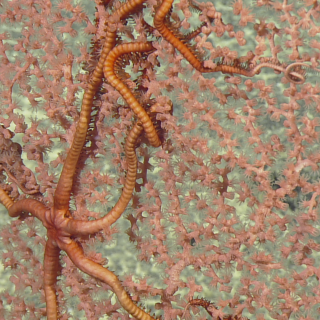
This expedition will focus on exploring the Mariana region- one of the ocean's most tectonically and volcanically dynamic locations, marked by the Earth’s deepest oceanic trench, some of the most active submarine volcanoes, and some of the oldest seafloor on the planet.
Deep-Sea Habitats in the Mariana Islands II
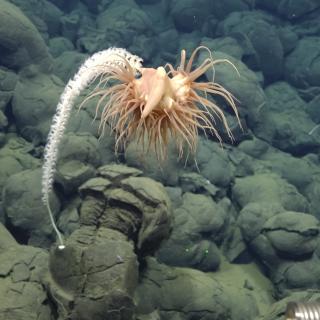
In our second expedition of the year in the Mariana region, E/V Nautilus will spend 22-days at sea.