Collecting Deep-Sea Sediment in a Box Corer
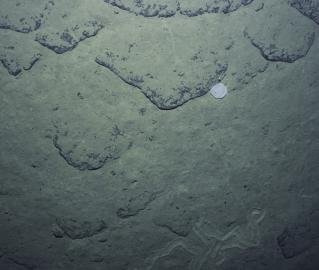
During our first ROV Hercules dive of NA179, while exploring an unknown seamount east of the Mariana Trench, our team used a box corer to sample deep-sea sediment. After landing at 3,789 meters (12,431 feet) in a sedimented valley on the planet's oldest seafloor, we deployed the box corer to bring a piece of this geological history to the ship's wet lab and eventually back to shore for further characterization.
For shallower sediment sampling, ROVs generally carry smaller, circular push cores. However, a box corer, as seen in this video, helps us collect larger, deeper, and better preserved layers within a sediment sample. Samples like this enable scientists to study stratigraphy (aka soil layers) to better understand how exactly marine snow and mineral deposits accumulate on the seafloor and how sediments shift and move downslope. In an area with no previous visual surveys, such as this part of the Mariana seabed, a core sample paired with acoustic data from the ship's sub-bottom profiler can help better understand the region’s geology.
Deep-Sea Habitats in the Mariana Islands I
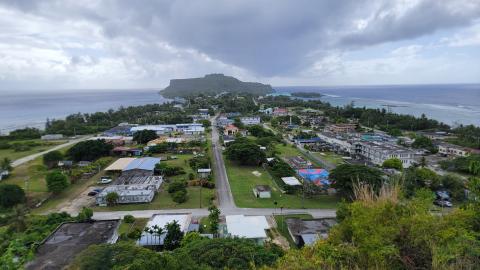
This expedition will focus on exploring the Mariana region- one of the ocean's most tectonically and volcanically dynamic locations, marked by the Earth’s deepest oceanic trench, some of the most active submarine volcanoes, and some of the oldest seafloor on the planet.