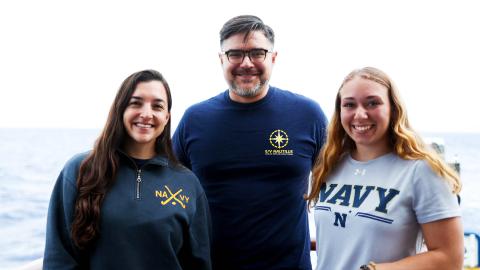
Meet Ocean Explorer Richie Valdez

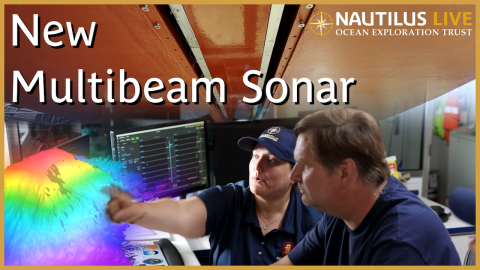
OET proudly welcomes Richie Valdez to the Corps of Exploration as part of the Science & Engineering Internship Program. This internship program supports community college, undergraduate, and graduate students in building professional workforce experience and exploring STEAM-related careers that connect to research themes like robotics, ocean science, education, and exploration. Richie is joining E/V Nautilus for our NA178 expedition as a seafloor mapping intern.
We sat with Richie to learn more about his experience at sea and the path that led him to Nautilus.
Describe your role with OET.
I am joining the E/V Nautilus as a seafloor mapping intern for the NA178 expedition. That means I'll be mapping the ocean floor of the Pacific Ocean between Hawaii and Guam. A lot of this area has never been mapped before, and not with the cutting edge mapping technology we have on the Nautilus. It's an exciting time to be on board!
Can you tell us a little about your background? What influenced you as a child?
I'm a somewhat non-traditional intern! I joined the U.S. Navy straight out of high school, where I served on a submarine. After I got out, I worked in electronics, engineering, and R&D for about 15 years while I completed my bachelor's degree. I studied Geography and Anthropology, with a focus in Archaeology, which I just completed spring of 2026. I was always fascinated by exploration as a kid, mainly through the lens of fiction by Verne, Wells, Bradbury, and Gene Roddenberry. But Dr. Ballard's book on the Titanic was on my coffee table. He showed me that the real world is stranger than fiction and has just as much unknown in it to be discovered.
When you were a kid, what did you want to be when you grew up?
It changed from one day to the next! Firefighter, cowboy, astronaut, pilot. Ocean explorer wasn't on the list, but only because I didn't know it was an option.
What would you consider to be your greatest challenge entering this field?
Probably breaking into the field in the first place. It is a challenge to be seen when there are so many other amazing and talented people interested in the same things. My peers on this expedition are much younger than I am, but they're top performers in science, engineering and oceanography. I was interested in science at their age, but I was a chronic underachiever. I only started to reach my potential later in life.
Do you have any advice for someone looking to follow a similar path?
I would encourage everyone not to be afraid of taking a non-traditional path. A career is a journey, not a destination, and it's never too late to try something new. Even if you're older or differently abled, there is a role you can play. Go out in the world and get involved.
What's next for your ocean studies and career?
I hope to continue working in ocean mapping! Hydrographic survey is a growing career field, and it's one I want to be involved in. I'm also interested in underwater archaeology, so that may lure me back into the world of academia at some point. For now, I'm just happy to be aboard!
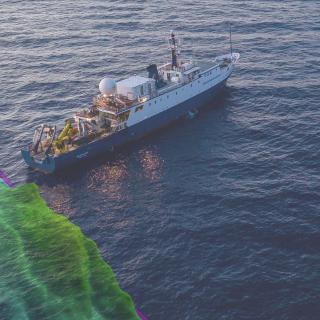
Pacific Mapping
Our first expedition of the 2026 season is a seafloor mapping expedition from Hawaiʻi to Guam, where E/V Nautilus will support subsequent expeditions exploring deep-sea habitats around the Mariana Islands.