Fossilized Shark Teeth Near Wake Atoll
While exploring the deep-sea around Wake Atoll during the NA181 expedition, our remotely operated vehicles helped the Corps of Exploration spot multiple fossilized shark teeth. Found at depths between 4,587 meters (15,049 feet) and 5,016 meters (16,457 feet), these teeth are covered in a dark coating similar to the nearby seafloor rocks. This is called a ferromanganese crust - a natural, black mineral deposit that precipitates very slowly from seawater and coats objects found on the deep ocean floor. These mineral deposits form at an average rate of 2.5 mm per million years, so their thickness can be used to approximate the age of objects covered by this coating. These shark fossils (many of which belong to the famous Megalodon or its ancient relatives) often become part of the ecosystem, with benthic creatures like coral and sponges sometimes attaching themselves to them.
Ocean Exploration Trust's Exploration of Wake Island's Deep-Sea expedition (NA181) is supported by NOAA Ocean Exploration via the Ocean Exploration Cooperative Institute.
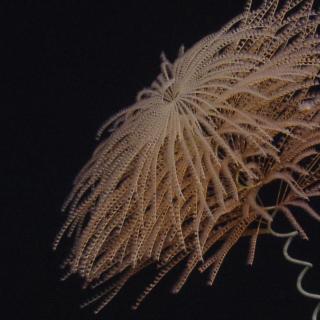
Exploration of Wake Island's Deep Sea
Located roughly midway between the Hawaiian and Mariana Islands, Wake Island is one of the most isolated land masses on Earth. While there have been some recent expeditions to this remote region, the vast majority of the 407,241 square kilometers of seafloor surrounding Wake remains unmapped and uncharacterized, thereby representing one of the most poorly surveyed areas under US jurisdiction.