Fashionista Backpack Crab & Unbothered Lizardfish
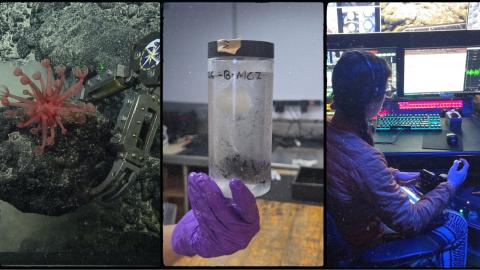
We witnessed all manner of deep-sea life while exploring the abyssal plain in the southwest region of the Wake Island EEZ. In this video, check out a carrier crab with a Dora-inspired backpack anemone. In addition to their long, thin walking legs, Homolidae crabs (also known as “porter crabs”) have modified rear appendages they use to pick up anemones and other things on the seafloor. Scientists speculate that this behavior could be related to physical camouflage, chemical camouflage, or predator defense. And fish fans, don’t worry- there’s also a Bathysaurus sp. fish! These fish (known as deep-sea lizardfish) are apex, ambush predators that often face into the current and snap at whatever swims or floats by. Enjoy a close look at the receptor sensors on its chin that help it find its next deep-sea tasty meal.
Ocean Exploration Trust's Exploration of Wake Island's Deep-Sea expedition (NA181) is supported by NOAA Ocean Exploration via the Ocean Exploration Cooperative Institute.
Exploration of Wake Island's Deep Sea
Located roughly midway between the Hawaiian and Mariana Islands, Wake Island is one of the most isolated land masses on Earth. While there have been some recent expeditions to this remote region, the vast majority of the 407,241 square kilometers of seafloor surrounding Wake remains unmapped and uncharacterized, thereby representing one of the most poorly surveyed areas under US jurisdiction.