Coral Garden Biodiversity near Wake Atoll
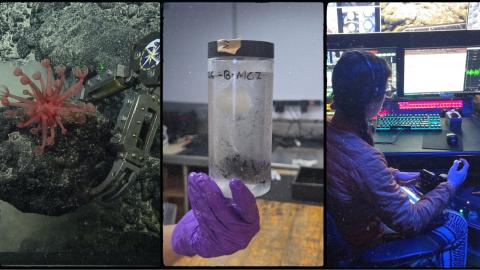
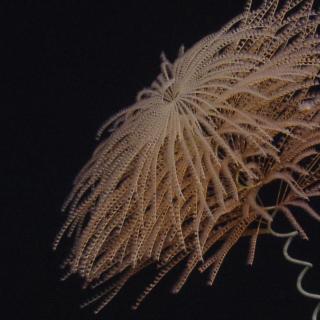
The deep sea is full of biodiversity, and on this dive on McDonnell Seamount west of Wake Atoll with ROVs Hercules and Atalanta, we were treated to some spectacular views of it. At 1,679 meters (5508 feet) deep, we found a cliff of pillow basalt filled with deep-sea corals and other creatures. From bamboo corals (class Octocorallia) to primnoid soft corals (family Primnoidae) to Iridogorgia genus spirals, we witnessed (and sampled!) all the colors of the deep-sea coral rainbow.
And of course, no deep-sea coral garden would be complete without associates! Spot crinoids, snake stars (class Ophiuroidea), and even barnacles living amongst the coral structures. When we see high-density areas of corals and other deep-sea animals, it usually means the area is fed by active currents. These currents bring tiny organisms and marine snow to the garden residents, many of which filter them out of the water column.
Luckily for us, deep-sea coral expert Dr. Steve Auscavitch explains how to identify these colorful critters along the way! Keep watching, and you’ll spot golden coral (genus Rhodaniridogorgia), soft corals in the genus Acanthogorgia, and even a bright red sea spider! Sea spiders are predators of coral, rounding out this deep-sea mini-ecosystem.
Ocean Exploration Trust's Exploration of Wake Island's Deep-Sea expedition is supported by NOAA Ocean Exploration via the Ocean Exploration Cooperative Institute.
Exploration of Wake Island's Deep Sea
Located roughly midway between the Hawaiian and Mariana Islands, Wake Island is one of the most isolated land masses on Earth. While there have been some recent expeditions to this remote region, the vast majority of the 407,241 square kilometers of seafloor surrounding Wake remains unmapped and uncharacterized, thereby representing one of the most poorly surveyed areas under US jurisdiction.