Abyssal Plain Symbiosis: Isopods on Glass Sponges
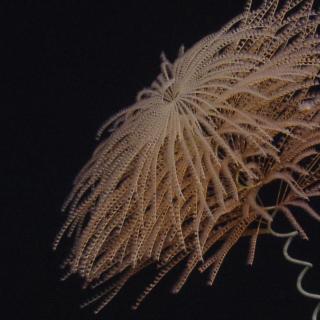
On the deep sea’s abyssal plain, suitable habitat can be hard to come by. That’s why we see animals often living alongside- and even on top of -each other. Glass sponges (class Hexactinellida) make excellent perches for deep-sea animals like the isopods seen in this video. Their sturdy glass-like structural particles, called spicules, are made of silica, giving them a rigid presence for associates to perch on when looking for prey.
The isopods in this highlight video (witnessed while diving over 5,800 meters deep on the abyssal plain in international waters northwest of the Marshall Islands EEZ and southwest of the Wake Island EEZ) belong to the Family Munnopsidae. Often affectionately called "daddy long legs of the deep sea,” they are scavengers and detritivores, feeding on sinking organic debris and decaying matter.
Ocean Exploration Trust's Exploration of Wake Island's Deep-Sea expedition is supported by NOAA Ocean Exploration via the Ocean Exploration Cooperative Institute.
Exploration of Wake Island's Deep Sea
Located roughly midway between the Hawaiian and Mariana Islands, Wake Island is one of the most isolated land masses on Earth. While there have been some recent expeditions to this remote region, the vast majority of the 407,241 square kilometers of seafloor surrounding Wake remains unmapped and uncharacterized, thereby representing one of the most poorly surveyed areas under US jurisdiction.