Headless Chicken Monster Sea Cucumber EATING on Seafloor!
Have you ever seen a headless chicken monster enjoy dinner? Well, this swimming sea cucumber (officially named Enypniastes eximia) shared a view of mealtime during our seafloor exploration of the Cook Islands. Watch through the lens of ROV Little Hercules exactly how it eats- a process that is integral to seafloor carbon cycling and connecting this magenta creature to the shallows above. Using their bifurcated tentacles, they scoop up sunken marine snow and other detritus between sediment grains on the seafloor and bring it to their mouths for a tasty treat. After a slow digestion, what's left behind is cleaned sediment , making sea cucumbers the ultimate MVPs in deep-sea nutrient cycling.
Special thanks to https://www.deepsea.com/ for their collaboration in testing the MxD SeaCam imaging system, which brought us this stunning ultra-high resolution footage!
The NA176 Deep Sea Habitats of the Cook Islands expedition was supported by NOAA Ocean Exploration via the Ocean Exploration Cooperative Institute using the ROV, mapping, and telepresence systems of E/V Nautilus to explore deep-sea areas prioritized by the Cook Islands government and local stakeholders. All collected data will be made publicly available to stimulate further exploration and research, and to support ongoing local management and future decision-making for the Cook Islands by Cook Islanders.
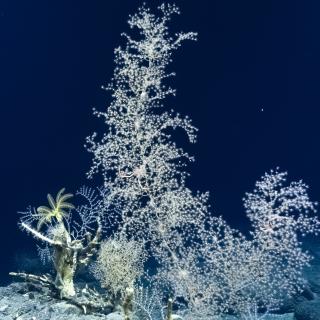
Deep-Sea Habitats of the Cook Islands
This 21-day expedition will utilize the ROV, mapping, and telepresence systems of E/V Nautilus to explore previously unsurveyed deep-sea priority areas identified by the management and science community in the Cook Islands.