First Views of Ancient Enrique Guyot
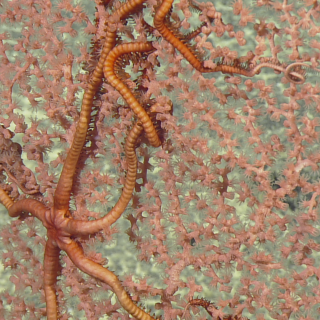
Ever had trouble telling the many-armed creatures of the deep from one another? Dive into this highlight from Enrique Guyot's exploration for help with your deep-sea animal ID, to keep your brisingid stars, brittle stars, and crinoids straight.
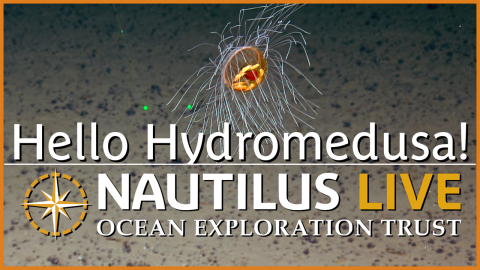
Along the way, catch glimpses of some of the other local Mariana seafloor residents - a pulsating hydromedusa, sprinting backpack crab, and 26-tentacled burrowing anemone. This exploration dive carried ROVs Hercules and Atalanta over 3,700 meters (12,100 feet) beneath the waves along the slopes of an extremely large seamount to characterize its valley and slope habitats, where no other deep submergence dives have been conducted.
Enrique Guyot is a flat-topped seamount near the Mariana Archipelago presumed to be one of the oldest seamounts on the Pacific plate. It belongs to the Magellan Seamounts chain on the Pacific Plate and dates back to the Cretaceous period. The dive is within the US exclusive economic zone but outside of the Mariana Trench Marine National Monument, which helps gather data about habitat similarities in and out of the boundaries.
Ocean Exploration Trust's Deep-Sea Habitats in the Mariana Islands I & II (NA179 & NA180) expeditions are primarily supported by NOAA Ocean Exploration via the Ocean Exploration Cooperative Institute, with additional support from the Bureau of Ocean Energy Management for AUV Sentry’s participation.
Deep-Sea Habitats in the Mariana Islands I
This expedition will focus on exploring the Mariana region- one of the ocean's most tectonically and volcanically dynamic locations, marked by the Earth’s deepest oceanic trench, some of the most active submarine volcanoes, and some of the oldest seafloor on the planet.