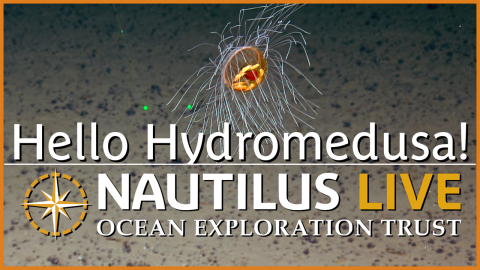
Deep-Sea Critters of the Mariana Seamounts
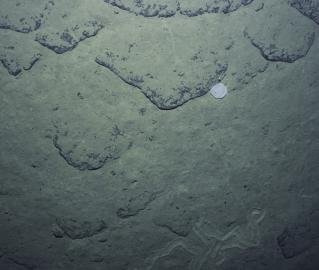
This expedition carries us to the Western Pacific, exploring some of the oldest seamounts on Earth. While exploring the mountain slopes at nearly the depth limit for ROV Hercules on an unnamed seamount east of the Mariana Trench, our Corps of Exploration witnessed some of the region's unique, remarkable deep-sea diversity and geological structure. At 3,795 meters (12,450 feet) deep, we spotted a deep-sea tripodfish (Bathytyphlops sewelli). Its Latin name translates to “living deep and blind,” which is fitting considering this fish has barely functional eyes with no imaging capabilities. This animal hunts prey using its sensory structures to detect movement.
Next, at 3,761 meters (12,339 feet) deep, ROV Hercules encountered a rarely seen deep-sea cusk eel from the genus Leucicorus. Their name comes from the Greek word for “white,” and only a handful of species in the genus have been fully described so far. These cusk eels are among the deepest-dwelling vertebrates in the ocean. Upslope, at 3,588 meters (11,771 feet), check out this fun pink shrimp trotting past the tiny holothurian making a cameo in the background. These deep-sea arthropods are called decapods because they have ten legs.
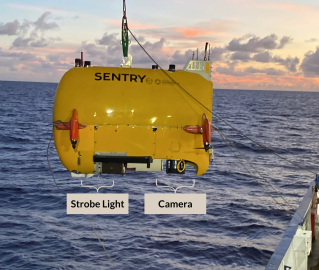
Ocean Exploration Trust's Deep-Sea Habitats in the Mariana Islands I & II (NA179 & NA180) expeditions are primarily supported by NOAA Ocean Exploration via the Ocean Exploration Cooperative Institute, with additional support from the Bureau of Ocean Energy Management for AUV Sentry’s participation.
Deep-Sea Habitats in the Mariana Islands I
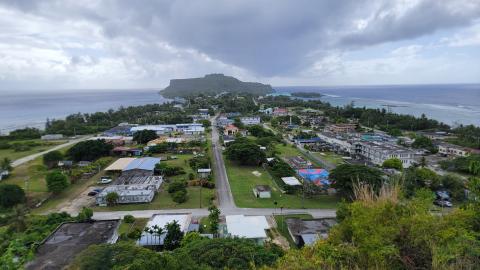
This expedition will focus on exploring the Mariana region- one of the ocean's most tectonically and volcanically dynamic locations, marked by the Earth’s deepest oceanic trench, some of the most active submarine volcanoes, and some of the oldest seafloor on the planet.