Colors of the Hawaiian Deep Sea
This photo album was created by NA182 guest scientist Bella Iannotta.
During NA182, exploring the deep waters within and near the Hawaiian Archipelago, the team on board E/V Nautilus explored abyssal environments (4,000 – 5,600 m depth) south of the main Hawaiian Islands. The second half of the expedition explored the mesopelagic environments (~ 250 – 600 m depth) of Papahānaumokuākea National Marine Sanctuary, the northwest Hawaiian Islands, and seamounts.
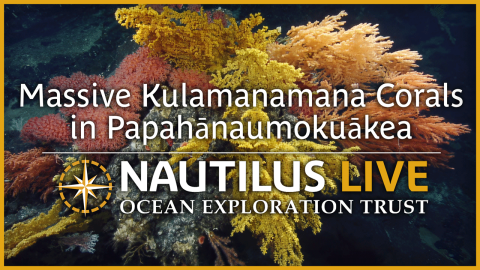
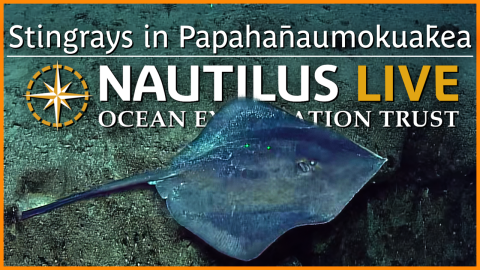
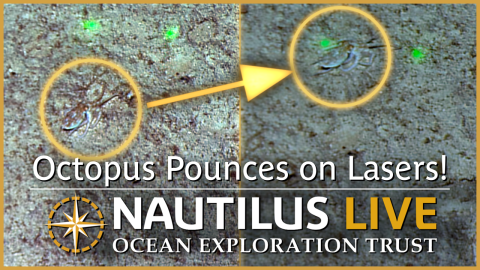
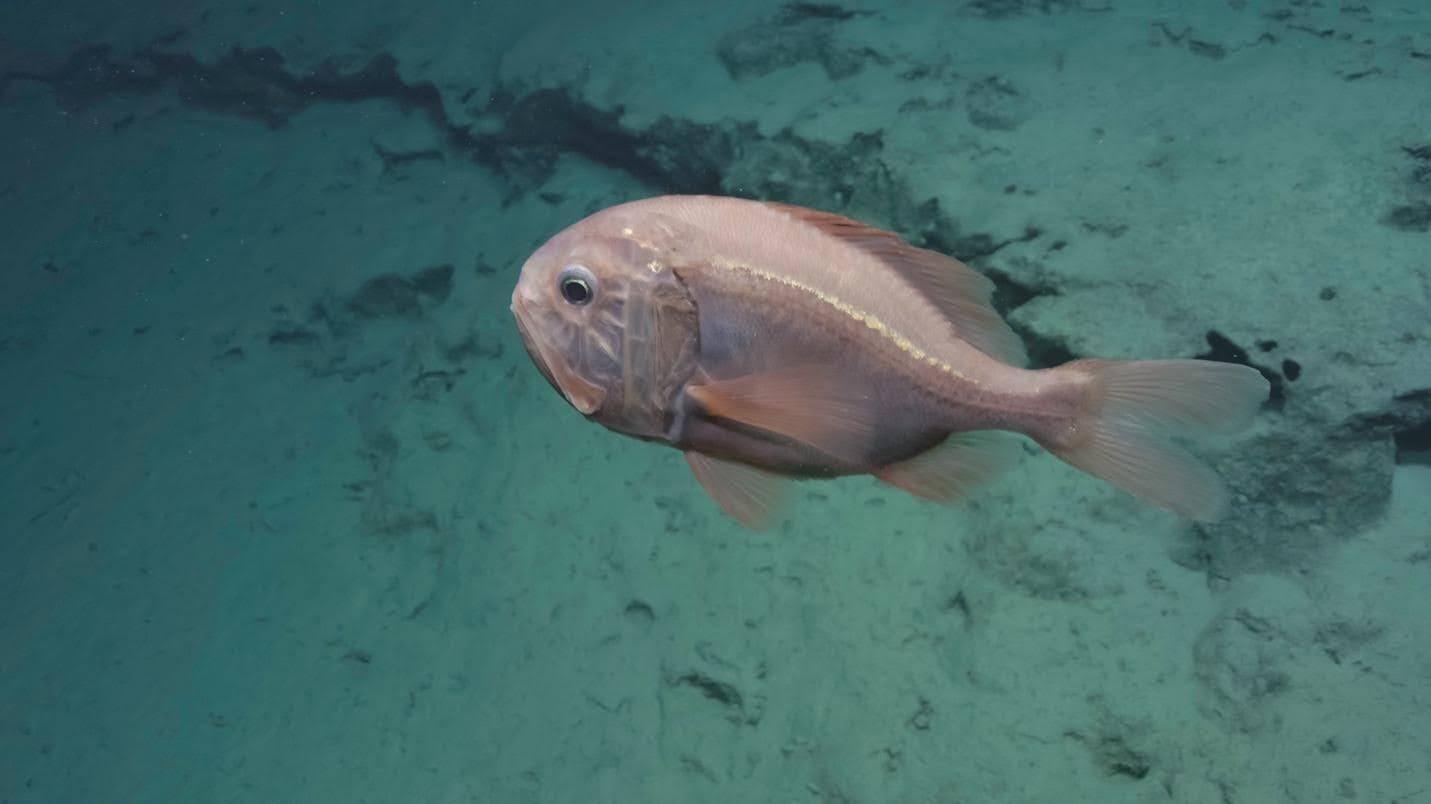
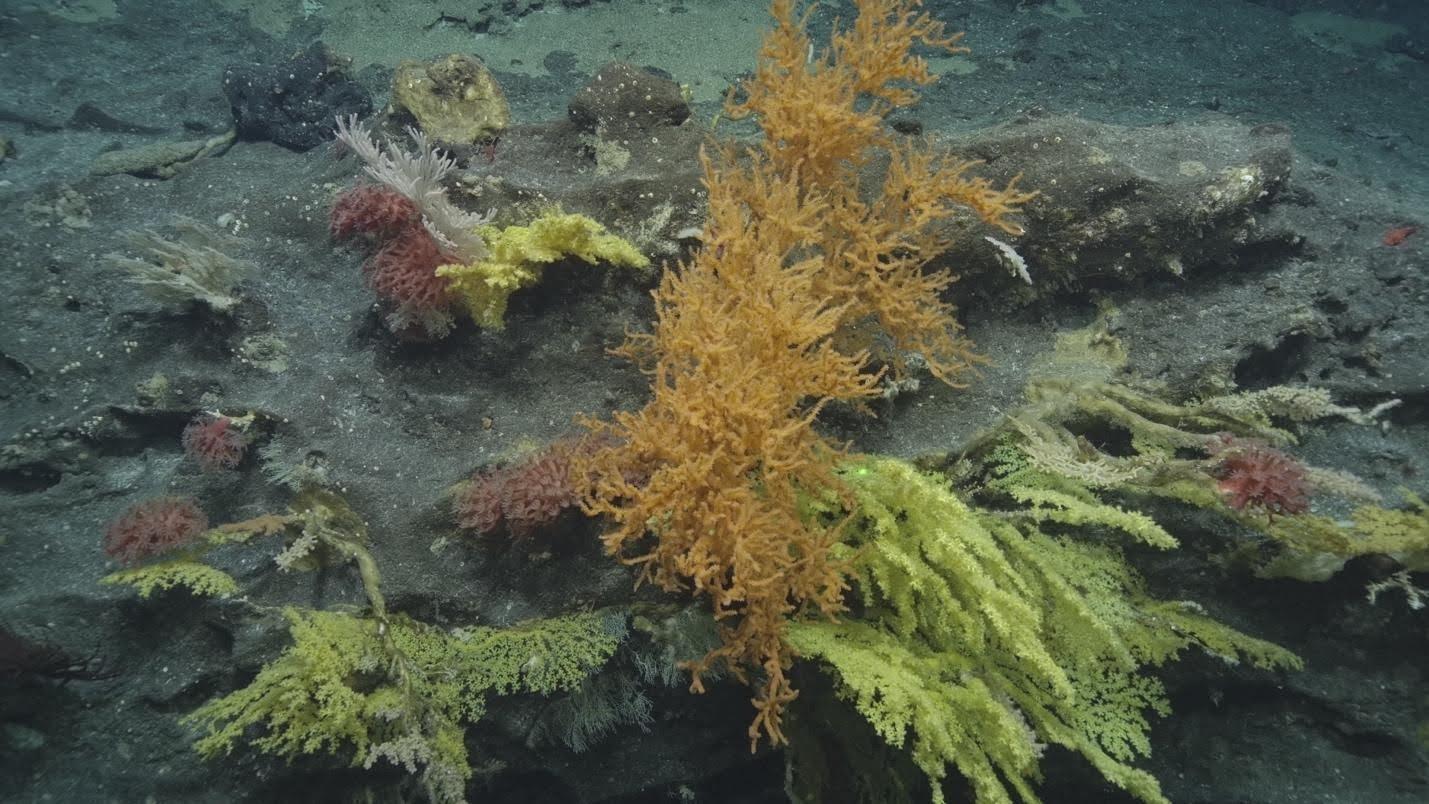
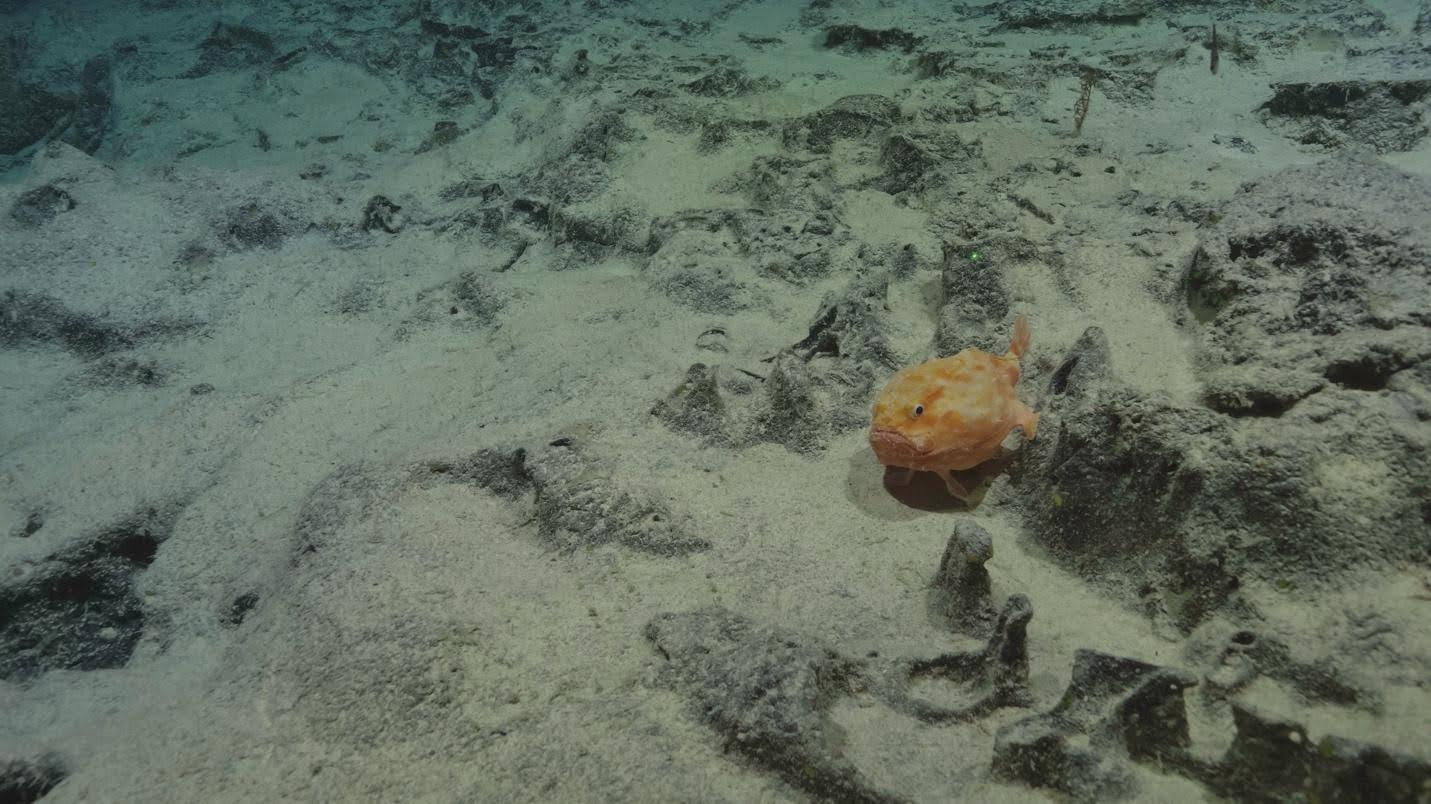
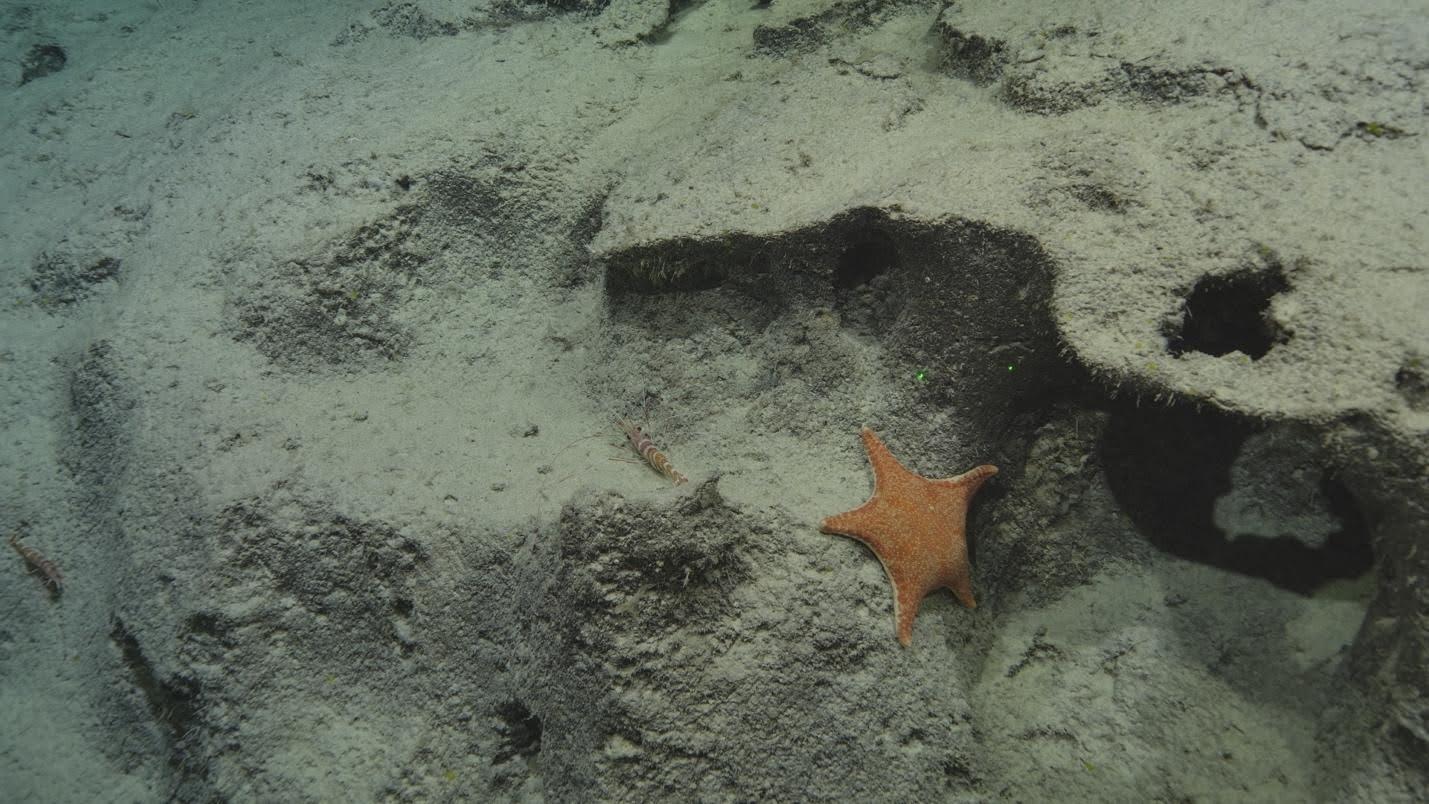
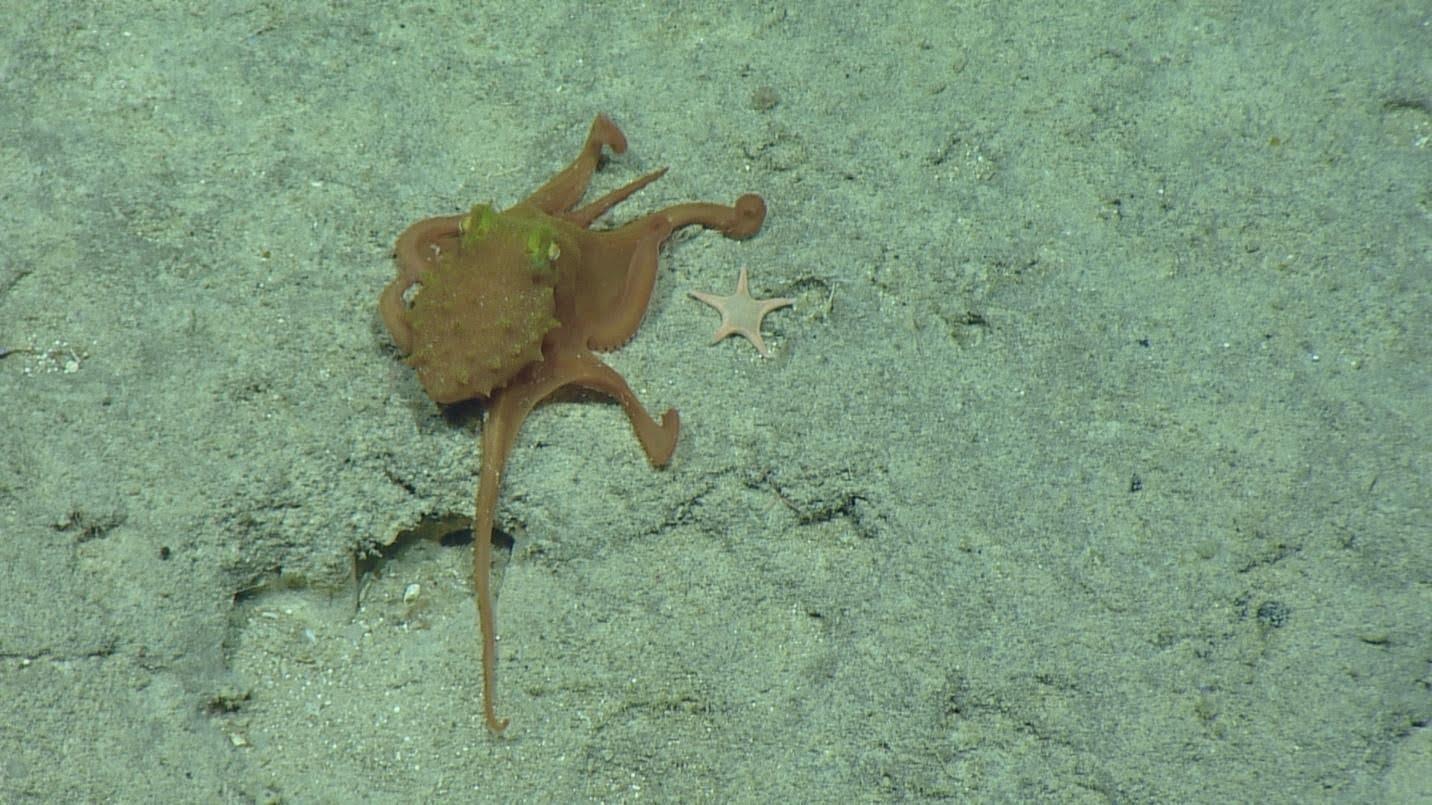
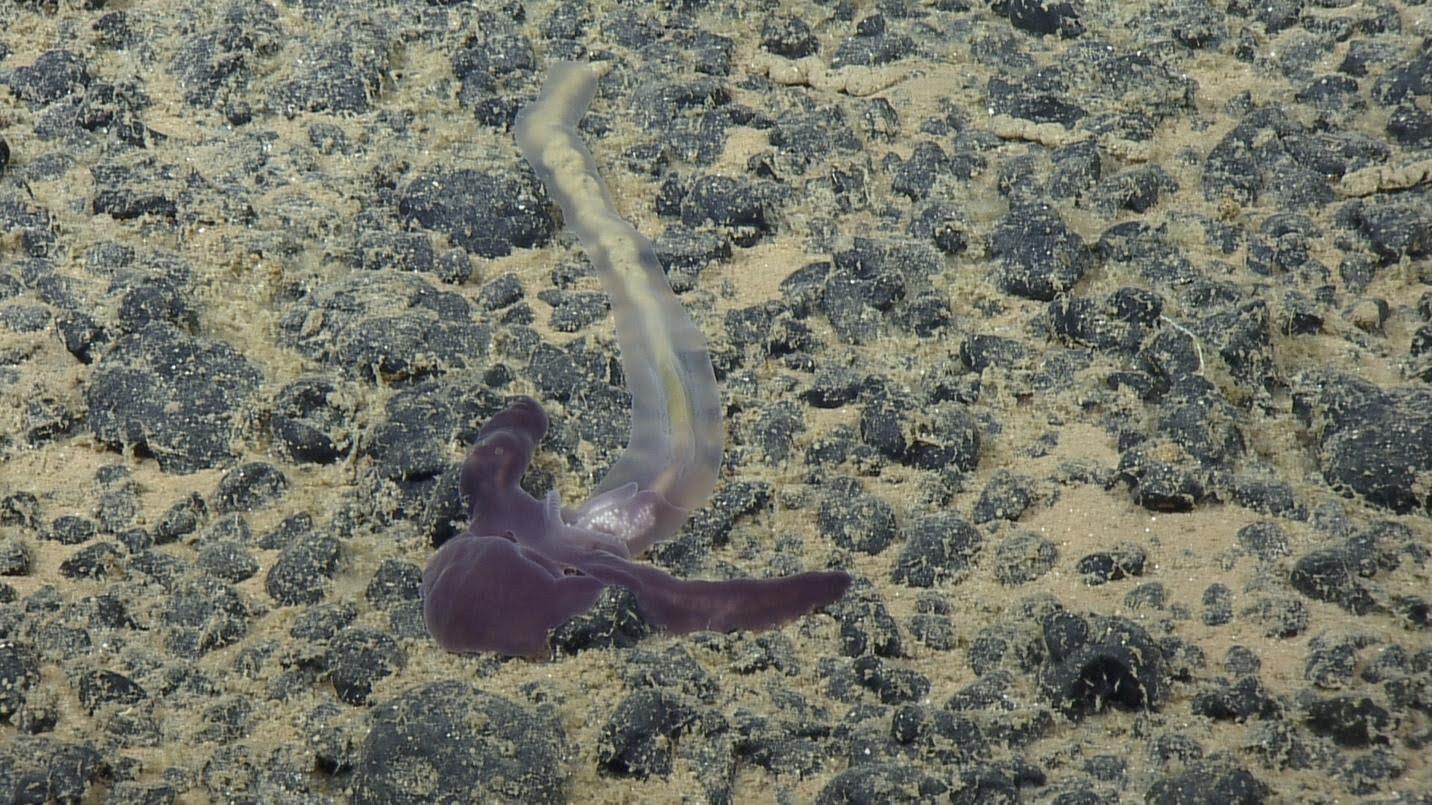
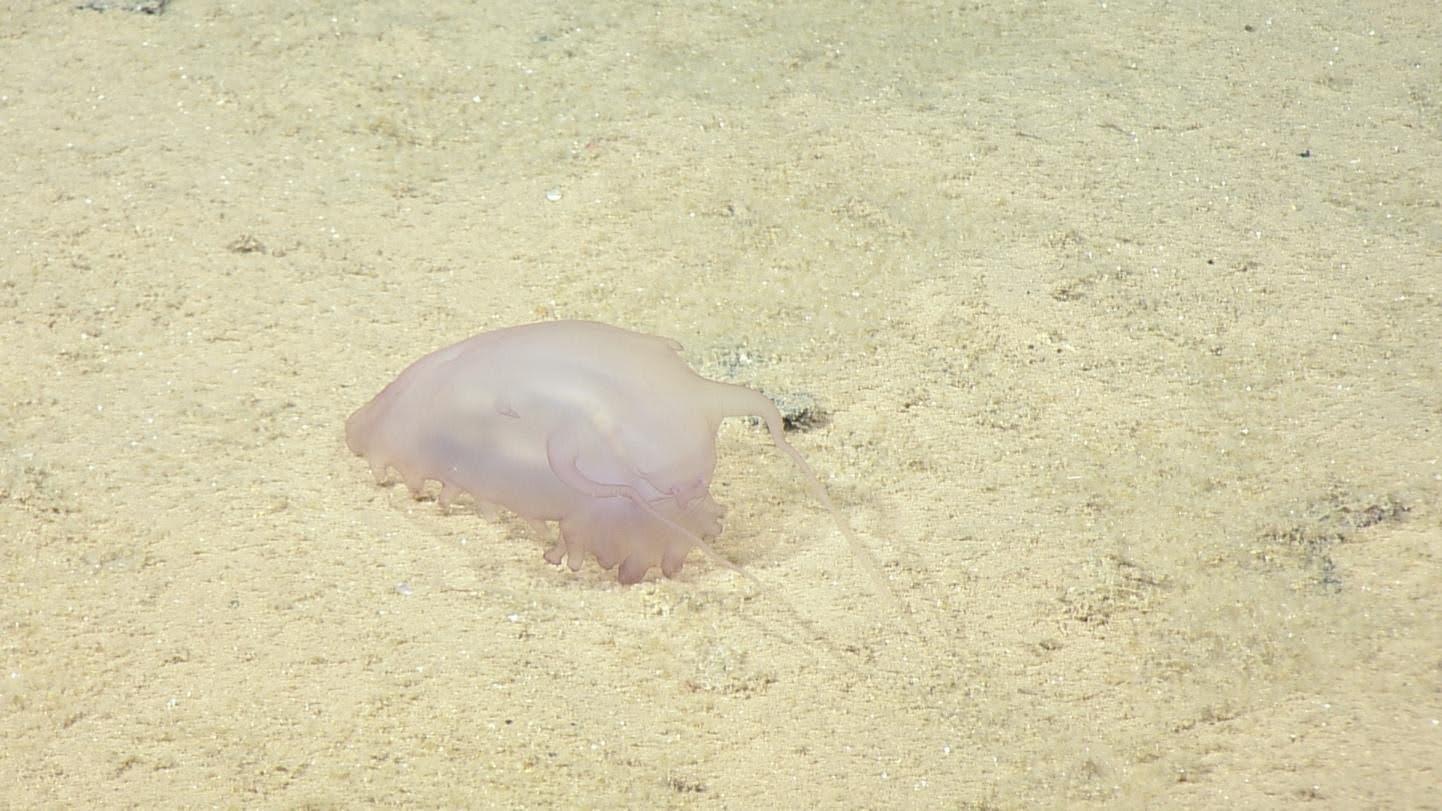
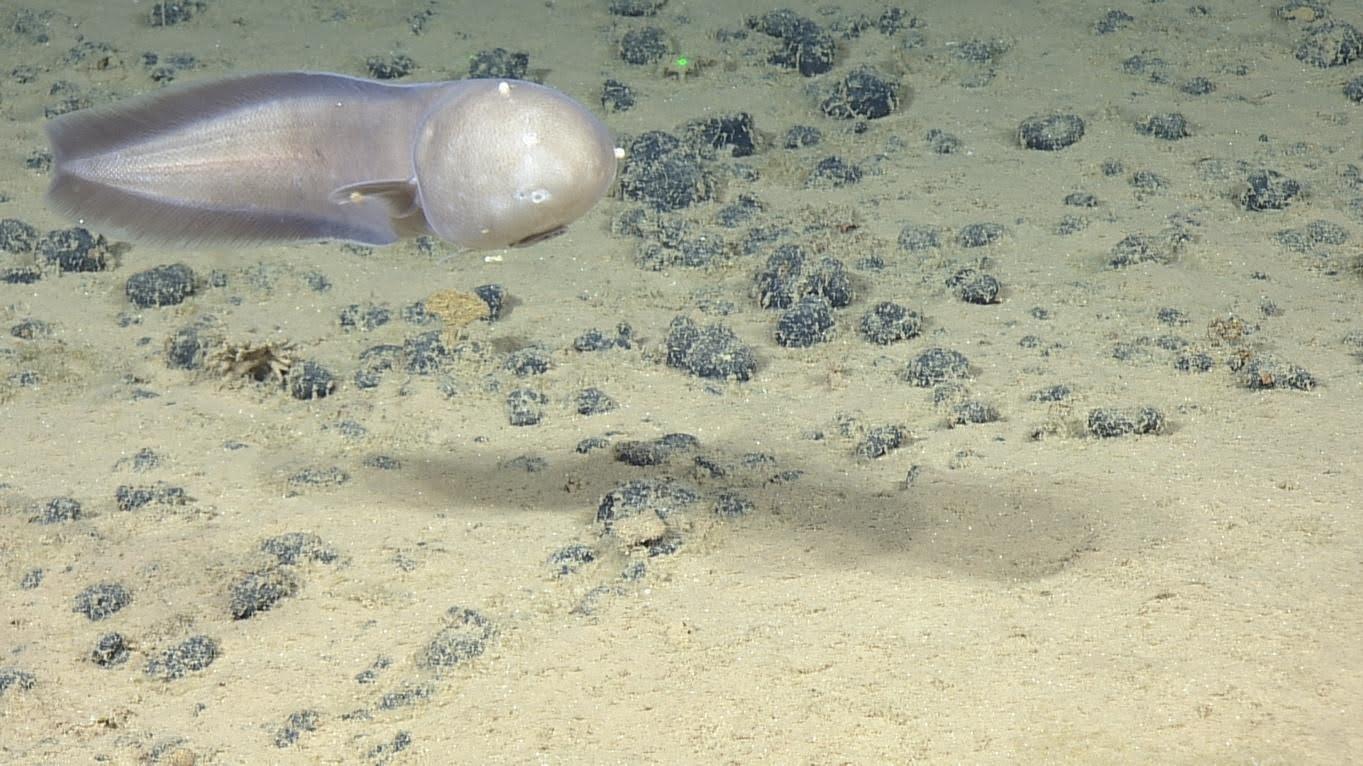
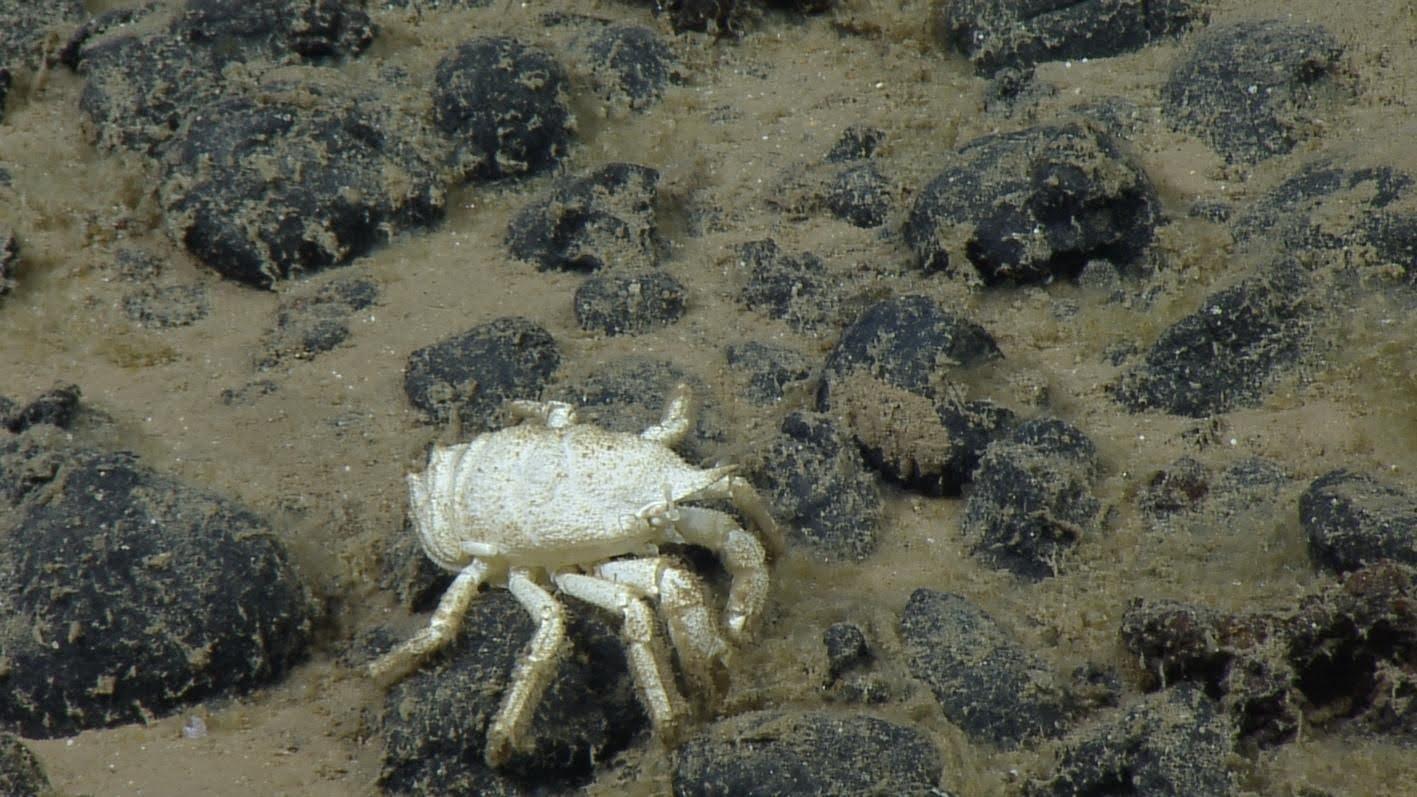
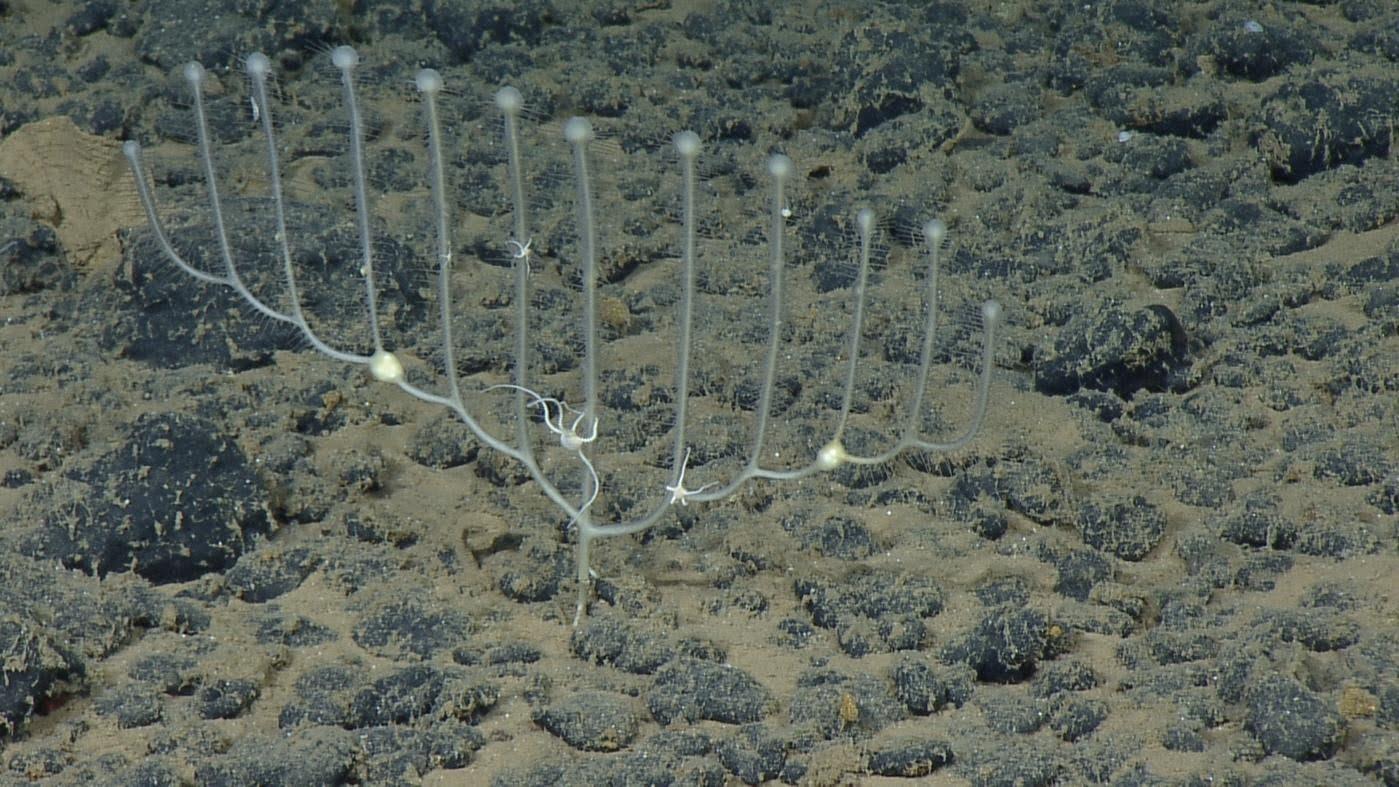
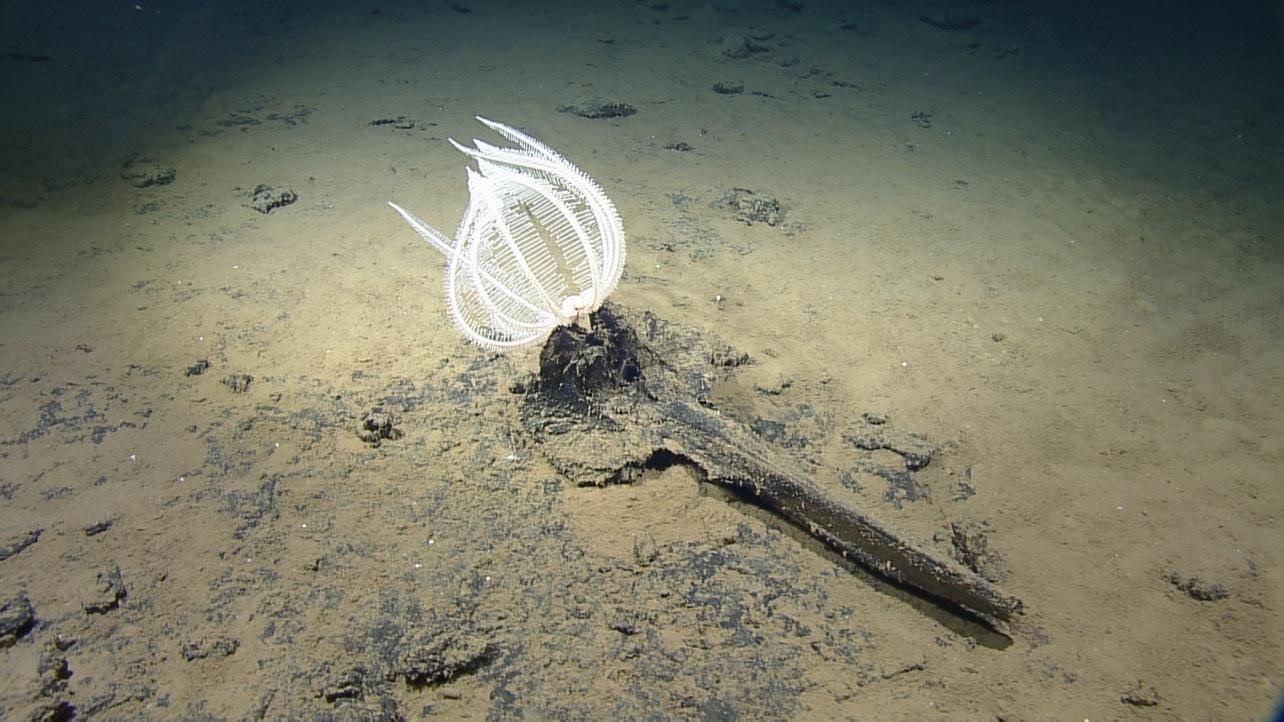
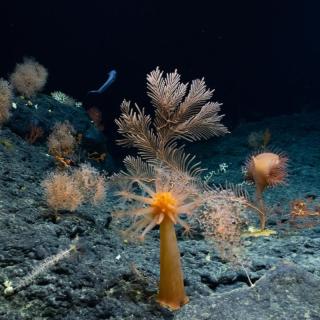
The colors of the organisms in both of these environments were dramatically different. We spotted many organisms that were white, pink, purple, translucent, and transparent at abyssal depths. During our mesopelagic (twilight zone) dives, we spotted organisms of all colors; many were orange and red. The evolutionary reasoning behind these trends is that no light reaches abyssal depths, rendering pigmentation to hide from predators unnecessary.
On the contrary, the mesopelagic zone still experiences some light input; therefore, many organisms have still evolved pigmentation to help them hide from predators. In the visible light spectrum, red has the longest wavelength and is absorbed first as light availability decreases, resulting in a lack of visible color and better camouflage against the dark ocean in the mesopelagic zone. This is why we saw so many red and orange organisms on our mesopelagic dives. Blue wavelengths are absorbed last, which is why we see the ocean as blue. Many thanks to Meagan Putts for identifying the vast majority of organisms spotted live during ROV dives.
Deep-Sea Habitats of the Hawaiian Archipelago
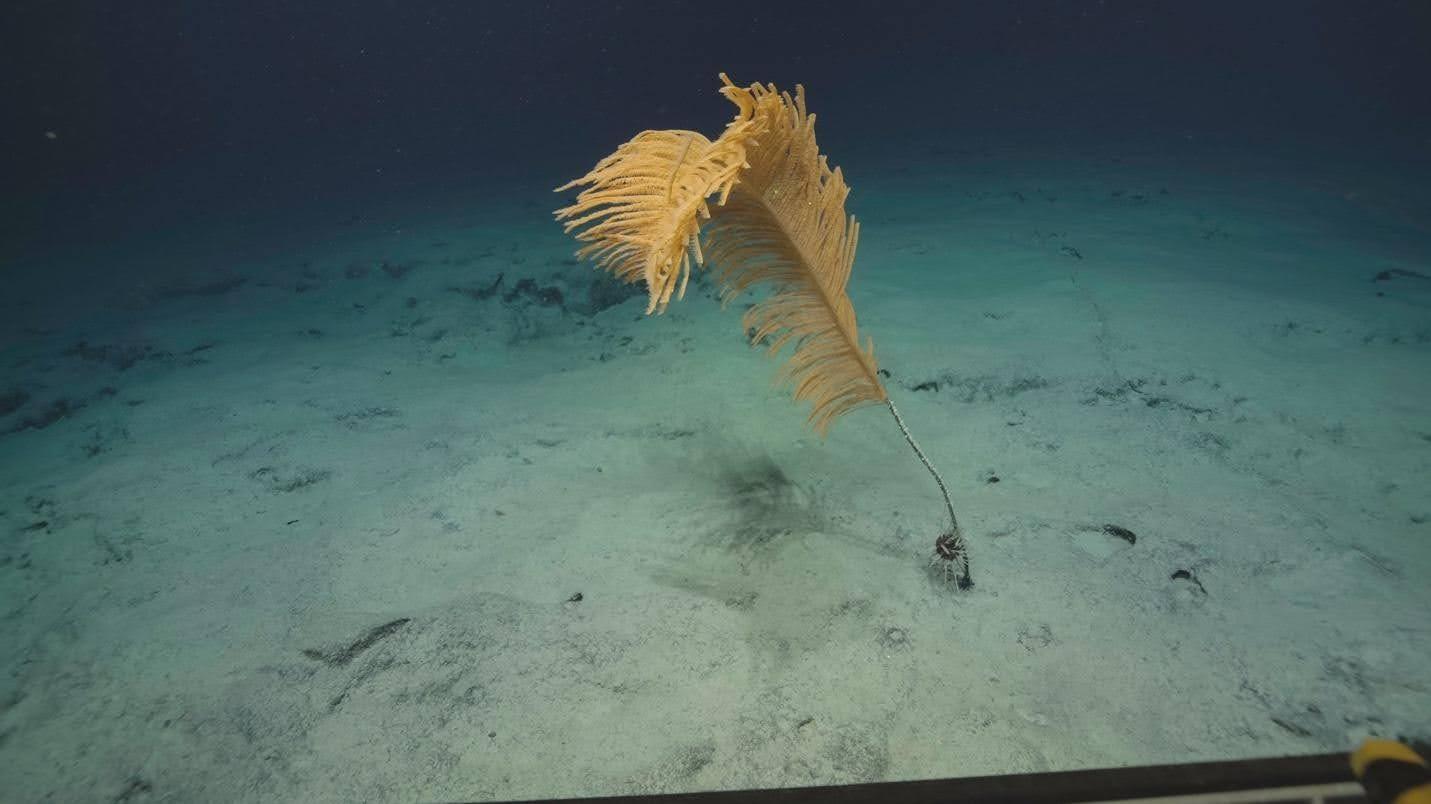
Our final OECI-sponsored expedition of 2026 brings E/V Nautilus back to the Hawaiian Islands. While nearshore waters surrounding the islands have been relatively well surveyed, many offshore areas remain completely unexplored, hindering efforts to effectively manage the resources of this unique region.