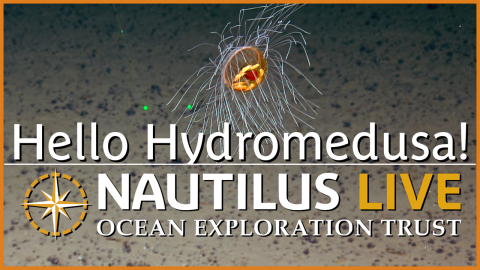
Beautiful Biodiversity on the Abyssal Plain
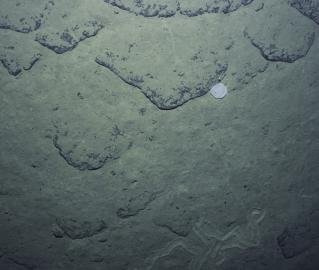
On a dive to the abyssal plain 185 nm northeast of the island of Uracus (Farallón de Pájaros), the team and live viewers worldwide had the first glimpses of the seafloor in this part of the Mariana region’s seafloor. Seeing much more than the wide-open sedimented fields and the world's oldest seafloor, the team on E/V Nautilus piloted ROV Little Hercules to over 5,800 meters (19,000 feet) deep.
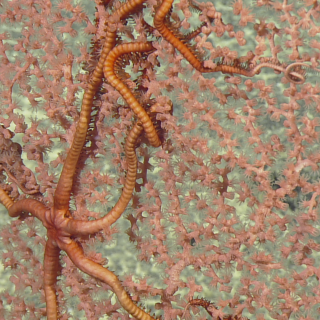
Taking full advantage of the marine snow and sediment-rich habitat, check out the well-fed sea cucumber and a long-stalked Umbellula octocoral (also known as a sea pen) snagging tasty morsels from the currents. Exploration continues to delight as the team witnessed a mysterious pancake sea urchin that experts in Ocean Exploration Trust’s Scientist Ashore network believe may be a new species. Surprises continue, spotting a large anemone rolling across the seabed. Normally considered sessile (or permanently attached to the seafloor), different species of deep-sea anemones have been observed rolling, cartwheeling, and sliding on their basal disks. More studies are needed to understand their active and passive motion patterns. Later, a brisingid sea star extends its arms into the current to catch floating marine snow, and a carnivorous sponge shows off its lollipop-shaped tissue.
This dive contained our least favorite sighting as well — marine debris. The ROV cameras spotted a plastic balloon and ribbon, a sobering reminder of the interconnectedness of our global ocean and the reach of human impacts. But don’t worry- more critters await! Watch until the end, as the team discovered the creature leaving its spiral-shaped biotrail clues behind on the seafloor. The Enteropneusta acorn worm is a bottom feeder that will consume nutrient-rich sediment as it turns itself, leaving a trail of processed mud and fecal matter behind before heading off to find another place to dine and digest.
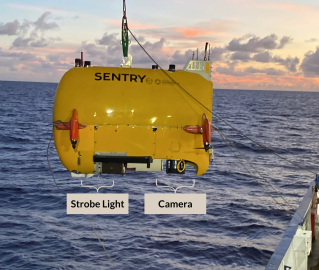
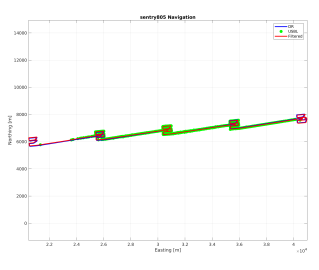
Ocean Exploration Trust's Deep-Sea Habitats in the Mariana Islands I & II (NA179 & NA180) expeditions are primarily supported by NOAA Ocean Exploration via the Ocean Exploration Cooperative Institute, with additional support from the Bureau of Ocean Energy Management for AUV Sentry’s participation.
Deep-Sea Habitats in the Mariana Islands I
This expedition will focus on exploring the Mariana region- one of the ocean's most tectonically and volcanically dynamic locations, marked by the Earth’s deepest oceanic trench, some of the most active submarine volcanoes, and some of the oldest seafloor on the planet.