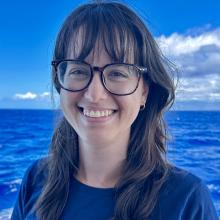
Gina Errico
Tell us about your work/research. What kinds of things do you do?
As a science communicator, every day at work looks different. I work with a variety of Natural Science departments at Bishop Museum, so a lot of my time is spent learning about the specimens in the museum collections and ongoing research. I then take that knowledge and develop creative and engaging ways to share this science with museum visitors and the public. My job involves developing interactive activities for visitors, coordinating behind-the-scenes tours and native plant giveaways, and working with teachers to integrate our museum resources into their lesson plans. Being a science communicator promotes my creative side, where I can create stamps for kids to create their own 'ocean ecosystems', and fuels my scientific curiosity, where I can see our preserved megamouth shark, and discuss the different ways we can promote the specimens that visitors typically don't see in the museum exhibits.
What sparked your initial interest in your career?
My career actually started in scientific research. I spent most of my undergraduate career exploring research in biology and ecology. As I worked my way through school, I realized that I loved learning about all things science and had a passion for sharing the importance of scientific research with the community. It wasn't until I was told by an advisor that there were actually jobs that would pay me to learn about and share science in fun and engaging ways that my path was set! Science is all around us and a part of our everyday lives, but not everyone is aware of how it works or why it is important that we support it. I have spent a lot of time learning about how the public views science, and the ways that science can be communicated with them most effectively, so that I can develop the best methods to engage them in science and teach scientists the skills to share their work as well.
Who influenced you or encouraged you the most?
My graduate school advisor was a huge supporter of my career and gave me the opportunity to pursue a degree in science whilst working towards a career in science communication. She helped me apply to various grants and fellowship programs, sought out opportunities for me in science outreach, and helped me find a balance between research and science science communication. It was her support that got me through graduate school and kicked off my career in science communication.
What element of your work/study do you think is the most fascinating?
The most fascinating part of my job is seeing the reactions of people who learn a new scientific fact. Watching the excitement of adults and kids blossom when they learn about science is truly inspiring. It breaks down the barriers between science and the public, fosters a passion for scientific inquiry, and makes my job feel all the more worth it.
How did you get involved with the Ocean Exploration Trust?
I applied for the Science Communication Fellowship. I have met various people who have worked with and for OET who shared their incredible experiences aboard the Nautilus, which encouraged me to try and become a part of it!
What other jobs led you to your current career?
As a formally trained scientist who was pursuing a career in science communication, I took as many opportunities as I could to get communication and outreach experience. I interned for a local conservation group in college, running social media campaigns and sending email blasts, and spent a year as an AmeriCorps member working in Marketing and Communication, where I learned the importance of targeted communication, explored a variety of digital media, and developed close relationships with community members. In graduate school, I was a fellow at the Stem Advocacy Institute and an AAAS Mass Media Fellow at the Los Angeles Times. I have always been interested in learning the different ways to communicate science, which has allowed me to develop skills in social media, graphic design, video editing, writing, and program management, that I would not have gotten without putting myself out there and trying new things.
What are your degrees and certifications?
Bachelor of Science in Biology and Bachelor of Arts in Anthropology-- The College of New Jersey 2020, Master of Plant Biology -- Oklahoma State University 2023
What are your hobbies?
I love anything crafty! I especially enjoy pottery and lauhala weaving. I also enjoy spending time outside, whether reading a book at the beach, hiking, or bird- or whale-watching.
What advice would you give someone who wants to have a career like yours?
Science communication can take hundreds of different forms, so the best thing to do is find someone who does the work you hope to do one day and ask them about their journey. The first time I was in a room full of science communicators I spent hours walking around and just asking people about what they do and how they got there, it was scary to do but it was worth it! The path to this career is often nonlinear, so talking with others in the field will give you insight into career options and may even lead to future opportunities. Don't be afraid to try something new or put yourself out there; you'll never know unless you try.
Expeditions
Gina participated in the following Ocean Exploration Trust expeditions:
